 Old Ranger Days
Clothing & Footwear
200g vs 400g Insulated Hiking Boots: Which Do You Need?
Pick 200g boots for short, active winter hikes down to about 10 °F, and 400g for all-day, slow or colder hikes. Picks from KEEN, Oboz and The North Face.
In this guide
The Oboz Bridger 10-inch Insulated, with 400g of insulation, is the boot to buy for all-day winter hikes in cold mountains. Treeline Review says you need 400g below 10 °F (-12 °C). SectionHiker recommends 400g boots for winter 4,000-footers in the Northeast.
If your hikes are shorter, you keep moving and it stays above about 10 °F, 200g is enough. SectionHiker puts 200g boots at 30 °F down to 10 °F (-1 °C to -12 °C). Our 200g pick is the KEEN Revel IV Mid Polar.
We did not test these boots. The picks come from manufacturer pages, tests by Treeline Review, GearJunkie, Switchback Travel and SectionHiker, and owner comments.
The other picks:
- The North Face Chilkat V 400: a 400g boot with a molded waterproof shell for slush, melt and wet snow.
- KEEN Revel IV Mid Polar: a 200g mid for active day hikes in milder winter weather.
Quick picks
| Pick | Best for | Why |
|---|---|---|
| Oboz Bridger 10-inch Insulated | All-day hikes in deep cold | 400g insulation, Regular and Wide sizes |
| The North Face Chilkat V 400 | Wet snow, slush and spring melt | 400g insulation inside a seam-sealed, molded TPU shell |
| KEEN Revel IV Mid Polar | Active day hikes in milder cold | 200g mid-height boot. The Amazon link is the women's version |
Links go to Amazon. They are affiliate links: we may earn a commission at no extra cost to you.
Video by Backpacking UK. We are not connected to this channel.
What do 200g and 400g mean?
The number is not the weight of insulation in your boot. SectionHiker and Treeline Review both explain it as insulation that weighs 200 or 400 grams per square meter. A square meter is just over 10.7 square feet.
SectionHiker says most 400g boots reach mid-calf, while most 200g boots are mids that stop just over the ankle. Treeline also finds that high boots tend to be 400g and mids 200g.
Temperature ratings for 200g and 400g boots
There is no standard test. SectionHiker says there is no standard way to measure how warm winter boots are. Rocky Boots says giving a temperature for each insulation weight "is not possible".
What testers report for hikers on the move:
| Insulation | Treeline Review | SectionHiker | KEEN's own rating |
|---|---|---|---|
| 200g | Down to 10 to 20 °F | 30 °F to 10 °F | -25 °F (-32 °C) |
| 400g | Down to -10 to -20 °F | 30 °F to -15 °F | -40 °F (-40 °C) |
KEEN's numbers come from a test where a plugged boot sits in a cold box for 30 minutes. They describe the boot, not a full day on a trail. SectionHiker says ratings assume you are walking briskly, not standing around.
Stops are where feet get cold. One SectionHiker reader says "during hiking" ratings were painful lessons once they stopped at camp. Switchback testers got cold toes in a 200g Merrell during sedentary time around 20 °F.
The picks in detail
Oboz Bridger 10-inch Insulated
This is for hikers doing long, cold days in the mountains, and for wide feet.
Oboz calls it "our warmest, burliest boot". It lists 400g Freeze Guard insulation, a nubuck leather upper and a waterproof B-DRY liner. The thermal insole has a reflective mylar layer. Men's sizes run 8 to 14, with a Wide option.
Oboz lists a weight of 27.4 oz (777 g) but does not say if that is per boot or per pair.
Treeline Review named the Bridger its best boot for extreme cold and for wide feet. Its tester wore the 10-inch boot in waist-deep snow at -20 °F, with a -50 °F windchill, and could still feel their toes. Treeline found they stay warm even when fully saturated.
In his long-term review, Philip Werner of SectionHiker found the Bridger 10-inch one of the easiest winter boots to hike in, with virtually no break-in. He says it runs slightly narrow but true to size. Its stiff toe box resists compression from microspike straps.
In a comment thread, Werner says he likes the Bridger 10-inch "the best, by far". He told a reader who runs warm to buy 400g for the White Mountains anyway. One owner in the same thread still got cold toes in 400g boots at 20 °F or below.
The drawback is the height. Treeline says groundfeel and ankle flexibility are limited.
The North Face Chilkat V 400
This is for wet winters: slush, wet snow and melting days.
The North Face lists 400g Heatseeker insulation, seam-sealed waterproofing and a molded TPU shell. It has a heel clip for snowshoes and a D-ring for gaiters. A half pair weighs about 1 lb 9.16 oz (713.3 g). The North Face says it has updated this model, so tests may cover the earlier version.
Treeline Review named it best waterproof boot, and Switchback Travel its best overall men's winter boot. GearJunkie says it kept feet warm through single-digit hikes and long snowshoe outings.
Testers disagree on fit. Treeline found it a bit narrow and snug at the heel, and suggests half a size up for thick socks. GearJunkie calls the fit roomy. Treeline also had some pinching at the ankle hinge on long hikes.
The drawback is warmth on mild days. Treeline says the shell can leave feet damp with sweat on warmer days. Switchback calls 400g overkill for mild days or dry conditions.
KEEN Revel IV Mid Polar
This is for hikers who move fast on shorter winter days in milder cold.
KEEN lists 200g of insulation rated to -25 °F (-32 °C), three layers of heat-trapping materials underfoot and 0.2-inch (5 mm) lugs. It gives a weight of 24.27 oz (688 g) per shoe and a shaft height of 4.53 inches. Men's sizes run 7 to 15. The Amazon link goes to the women's version of the same Mid Polar.
GearJunkie made the Revel IV Mid and High Polar its top winter hiking boots. They kept testers' feet warm on Colorado 14ers. GearJunkie calls the Mid's fit "very roomy" and wide. SectionHiker says it suits mild winter weather and has a large toe box.
The drawback, per GearJunkie, is that it is heavier and stiffer than lighter winter hikers.
How to choose
Should I get 200g or 400g insulated boots?
Get 400g if you hike all day, move slowly, hike with a group, or expect temperatures below 10 °F. Treeline Review also points to 400g if your feet run cold, you go deep into the backcountry, or you hike in mixed precipitation around freezing.
Get 200g for faster, shorter hikes in milder cold. Treeline says 400g boots tend to be heavier and can tire you sooner.
For deep cold, pick the Oboz Bridger 10-inch. For short, active hikes, pick the KEEN Revel IV Mid Polar.
Which 400g boots are made for men?
The Oboz Bridger 10-inch and The North Face Chilkat V 400 both come in men's versions. Women get a 9-inch Bridger. KEEN's tall Revel IV High Polar has 400g, and SectionHiker lists the Salomon Toundra Pro as a 400g equivalent.
KEEN advises going up half a size for its 400g Revel IV High Polar. REI warns that boots too tight with thick socks can cut off circulation. Try boots on with the socks you hike in.
Our hiking socks guide helps you pick that sock first.
Can you wear 200g or 400g boots in summer?
Not for summer hiking. Treeline Review says insulated boots in warm weather are sweaty, heavier and less flexible, and suggests a lightweight hiking boot. Treeline adds that 400g feels very warm above freezing.
Rocky Boots says 200g should not overheat you if the temperature rises.
Is 800g better than 400g?
Usually not. Rocky Boots says 800g is typically the heaviest insulation you will want if you are moving non-stop. It says 800g is popular with deer stand hunters, who sit still.
What else keeps feet warm?
Insulation is one part of a system. KEEN says it is hard to have warm feet when they are soaked by slush or sweat. SectionHiker adds warm socks, gaiters, insulated insoles and traction to the boots. REI advises carrying a spare pair of socks.
In snow, add gaiters of the right height. On ice, read microspikes vs crampons for winter hiking. SectionHiker points out that temperatures drop after dark, so plan your turnaround time before dark.
The outdoor gear guide covers the rest of your winter kit.
Frequently asked questions
What temperature is 200g insulation good for?
Roughly 10 to 30 °F while you keep moving. Treeline Review says 200g boots are comfortable down to 10 to 20 °F, and SectionHiker gives 30 °F to 10 °F. KEEN rates its 200g boots to -25 °F, but that comes from a 30-minute cold-box test, not a day on the trail.
What temperature are 400g insulated boots rated for?
Testers put them at roughly 30 °F down to -15 or -20 °F for active hiking. Treeline Review gives -10 to -20 °F, and SectionHiker says 30 °F down to -15 °F. KEEN rates its 400g Revel IV High Polar to -40 °F in a cold-box test.
Can you wear 200g or 400g insulated boots in summer?
Not for summer hiking. Treeline Review says insulated boots worn when it is too warm are sweaty, heavier and less flexible, and it suggests a lightweight hiking boot instead. It adds that 400g boots feel very warm above freezing. Rocky Boots says 200g should not overheat you if the temperature rises.
Is 400g insulation twice as warm as 200g?
Sources disagree. SectionHiker says a 400g boot is twice as warm as a 200g boot. Rocky Boots says 400g is certainly warmer but not twice as warm. Both agree it is warmer, and boot height, fit and socks change the result too.
Is 800g better than 400g for hiking?
Usually not. Rocky Boots says 800g is typically the heaviest insulation you will want if you keep moving non-stop. It describes 800g as a popular choice for deer stand hunters, who sit still in the cold.
Sources
- Oboz: Men's Bridger 10-inch Insulated Waterproof Winter Boot
- The North Face: Men's Chilkat V 400 Waterproof Boots
- KEEN: Men's Revel IV Polar Waterproof Boot
- KEEN: FAQ, How Much KEEN.WARM Insulation for Winter?
- KEEN: Anatomy of a Shoe, Revel IV Polar Boot
- Treeline Review: Best Winter Hiking Boots of 2026
- GearJunkie: The Best Winter Hiking Boots of 2026
- Switchback Travel: Best Winter Boots of 2026
- SectionHiker: Understanding the Benefits of 200g and 400g Winter Boots
- SectionHiker: 10 Best Winter Hiking Boots
- SectionHiker: Oboz Bridger 10-Inch Insulated 400g Winter Hiking Boot Review
- Rocky Boots: Insulation Guide
- REI Expert Advice: Cold-Weather Hiking
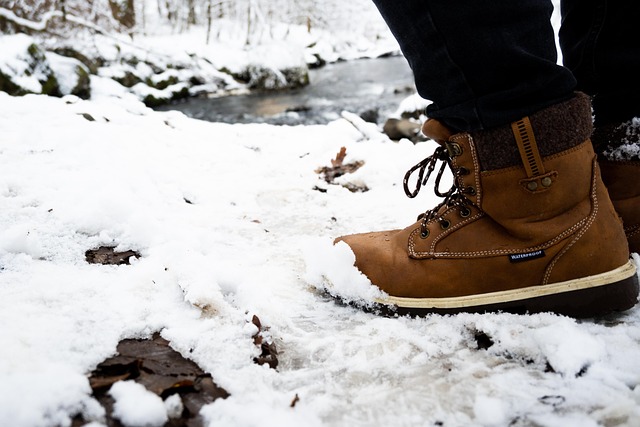
Cover photo: Designmodul on Pixabay.
Old Ranger Days is research-based: we work from verified specifications and official sources, and never claim hands-on testing unless it happened. Some links may be affiliate links. Editorial policy · Affiliate disclosure