 Old Ranger Days
Clothing & Footwear
When to Use Microspikes vs Crampons for Winter Hiking
Microspikes handle packed, icy trails at low angles. Steeper, technical terrain calls for crampons, rigid boots, an ice axe and winter skills training.
Kahtoola MICROspikes are the traction most winter hikers need. They are made for packed snow and ice on trails. Mountaineering Scotland says this kind of device is designed for low-angle inclines, typically 15 to 20 degrees.
On steeper, more technical terrain where a slip could have serious consequences, Mountaineering Scotland calls crampons essential. Our crampon pick is the Petzl Vasak. Mountaineering Scotland pairs crampons with a rigid boot and an ice axe, and advises considering a winter skills course.
We did not test these products. The picks come from manufacturer pages, tests by Treeline Review, The Great Outdoors and UKClimbing, and owner reviews.
The other picks:
- Hillsound Trail Crampon: a heavier, strapped-on spike for hikers in boots with a full pack.
- Kahtoola K10 Hiking Crampons: a strap-on crampon for flexible hiking boots on icy, non-technical terrain.
- Petzl Vasak: a 12-point mountaineering crampon for steep, hard snow, with the boots, axe and skills to match.
Quick picks
| Pick | Best for | Why |
|---|---|---|
| Kahtoola MICROspikes | Most winter hikers on packed, icy trails | Twelve 0.41-inch spikes per foot, 11.9 oz a pair in medium |
| Hillsound Trail Crampon | Hikers in boots with a full pack | Velcro strap across the foot and eleven 2/3-inch spikes |
| Kahtoola K10 Hiking Crampons | Icy, non-technical terrain in flexible hiking boots | Ten 3/4-inch steel spikes on a bar that flexes |
| Petzl Vasak | Steep, hard snow with stiff boots and an ice axe | 12 points, with two long front points for hard snow |
Links go to Amazon. They are affiliate links: we may earn a commission at no extra cost to you.
Video by I'd Rather Be Hiking. We are not connected to this channel.
The picks in detail
Kahtoola MICROspikes
These are for day hikers and backpackers on packed, icy trails that stay at gentle to moderate angles.
Kahtoola lists twelve stainless steel spikes per foot, each 0.41 inch (10.4 mm) long. A medium pair weighs 11.9 oz (338 g). The harness keeps its elasticity down to -22 °F (-30 °C). Kahtoola backs it with a 4-year limited warranty.
Treeline Review named them its best traction for hiking and called them "the best bet for most people for most uses". SectionHiker says they give excellent traction on packed snow and light ice on fairly level trails.
A Trailspace reviewer with 13 winters on MICROspikes reports confident grip on hardpack, ice and snow. She also says the cleats dull on rock, and that the harness on her current pair broke. Her warning is blunt: "MicroSpikes do not replace crampons."
The main drawback is fit. Treeline found they sometimes slip to one side of the shoe and need adjusting during a hike. They also have no Velcro strap across the instep.
Hillsound Trail Crampon
This one is for hikers in hiking or insulated boots who carry a full pack.
Despite the name, it is not a mountaineering crampon. Hillsound says "Trail crampon" describes a traction device for non-technical terrain.
Hillsound lists eleven carbon steel spikes, each 2/3 inch (1.7 cm) long, on a plate system. A pair weighs 16.3 oz (462 g), and a Velcro strap crosses the foot.
Treeline Review named it best for backpacking and hiking. It called it the most secure-feeling ice gripper it considered, and credited the strap. Its tester also had to remove ice balls from the spikes by hand to keep traction.
On Hillsound's own page, a hiker over 200 lb with a full pack says it fills the gap between microspikes and full crampons. Another owner had to repair a pair three times in the first year because chain links kept opening.
The drawback is weight: 16.3 oz against 11.9 oz for medium MICROspikes.
Kahtoola K10 Hiking Crampons
The K10 is for hikers in flexible hiking boots on icy, non-technical terrain.
Kahtoola lists ten chromoly steel spikes per foot, each 3/4 inch (2 cm) long. A flex bar moves with flexible footwear, and two buckles close the bindings. A regular pair weighs 23.6 oz (670 g).
Treeline Review named it the best non-technical mountaineering crampon. Its testers warn that the K10 is too aggressive for casual winter hiking and "can't do everything that mountaineering crampons can do".
On a Backpacking Light forum thread, a hiker was slipping on sidehill snow and ice. One member recommended Kahtoola's hiking crampons, the K10 among them. The reason given: the front points are bent down, and points that stick out forward are a hazard for hiking.
The drawback is a narrow use. At 23.6 oz it weighs about twice as much as medium MICROspikes.
Petzl Vasak
The Vasak is for hikers moving into classic mountaineering in semi-rigid boots.
Petzl calls it a classic mountaineering crampon. It is a steel crampon with 12 points, and two long, wide front points for hard snow. Petzl lists a maximum weight of about 31.6 oz (895 g) with its ANTISNOW system fitted.
It is sold in two binding versions. LEVERLOCK UNIVERSEL is for boots with heel welts, and FLEXLOCK is for boots without toe and heel welts.
The Great Outdoors called it well-designed and versatile, suited to winter walking, gullies and easier mixed climbs. It also called it ideal for novices looking to expand their skills. UKClimbing praised its bite in hard ice and its feel on steep snow.
UKClimbing also names the drawback. The long points feel "skittery and trippy" on bare ground and rocky ridges, and you are more likely to snag a trouser leg.
Check which binding a listing includes before you buy, and fit the crampons to your boots at home.
How to choose
When are microspikes enough?
Microspikes are enough on packed snow and ice at a low angle. Mountaineering Scotland says they are designed for low-angle inclines, typically 15 to 20 degrees.
Treeline Review's overall winner is the lighter Black Diamond Distance Spike, but its tester did not trust the smaller spikes on steep ice.
For most trail hiking, pick the Kahtoola MICROspikes. In boots with a full pack, pick the Hillsound Trail Crampon. Our snowshoes vs microspikes guide covers the deep-snow side of the question.
When do you need crampons instead of microspikes?
Mountaineering Scotland calls crampons essential for steeper, more technical terrain where a slip could have serious consequences. SectionHiker explains why microspikes fall short there. Their chains have too much give, and the spikes are too short to hold your full weight on higher-angle ice.
The Appalachian Mountain Club says an ice axe is useless without training. It recommends a course to learn self arrest. Mountaineering Scotland advises considering a winter skills course that covers both micro spikes and crampons.
One Backpacking Light forum hiker in microspikes kept slipping on sidehill sections of soft snow over slush and ice. Rangers told him he would probably need crampons. He turned around about a mile short of his goal.
For icy, non-technical terrain, the Kahtoola K10 fits. For steep, hard snow with the skills to match, the Petzl Vasak fits. Read trekking poles vs ice axe before you go higher.
Do crampons work with regular hiking boots?
Only some do. The Great Outdoors says the crampons it rates by boot compatibility all require a semi-rigid boot for a secure fit.
Hiking crampons are different. SectionHiker says crampons for soft-soled hiking boots have a flexible center bar. The K10 has one, and Kahtoola says it moves with the foot in flexible footwear.
If your hiking boots are flexible, the Kahtoola K10 is the pick. If you are also choosing winter footwear, see 200g vs 400g insulated hiking boots.
Which one should you carry on a mixed day?
SectionHiker's advice is to carry the lightest load you can safely carry. Put microspikes on when your boots no longer give you traction, because extra weight on your feet tires you.
Time of day matters too. Guide Andrew Skurka writes that snow firms up or crusts over most nights. That can make even low-angle snow a problem early in the day.
For most mixed trail days, the Kahtoola MICROspikes are the ones to pack.
For the rest of your kit, start at the outdoor gear guide. The cold-weather hiking gear and safety hub helps you plan the trip itself.
Frequently asked questions
Are microspikes and crampons the same thing?
No. Microspikes are chains and small spikes worn over your boots for packed snow and ice on trails. Crampons are longer and sharper, and are built for steeper snow and ice. SectionHiker notes microspike chains and spikes have too much give and are too short to hold your full weight on higher-angle ice.
When are microspikes not enough?
When the terrain is steep or technical and a slip could lead to a serious fall. Mountaineering Scotland says micro spikes are designed for icy paths and tracks with low-angle inclines, typically 15 to 20 degrees. It calls crampons essential for steeper, more technical terrain where a slip could have serious consequences.
Can I wear crampons on regular hiking boots?
Only some of them. The Great Outdoors says the crampons it rates by boot compatibility all require a semi-rigid boot for a secure fit. The Kahtoola K10 hiking crampon has a flex bar that moves with flexible footwear, and Kahtoola describes it as for mixed, non-technical terrain.
Do I need an ice axe if I carry crampons?
The two traditionally go together, and the axe is no use without training. Mountaineering Scotland says the right kit has traditionally been an ice axe with crampons that fit a rigid boot. The Appalachian Mountain Club says an ice axe is useless without training and recommends a course to learn self arrest.
Do microspikes work in deep snow?
Not in deep, soft snow. A Backpacking Light forum member put it plainly: if the soft layer is deep, no spiked device will find traction. SectionHiker says snowshoes give flotation in powdery or deep snow, while microspikes and crampons give traction on ice and packed snow.
Sources
- Kahtoola: MICROspikes Footwear Traction
- Kahtoola: K10 Hiking Crampons
- Hillsound: Trail Crampon
- Petzl: VASAK Mountaineering Crampons
- Treeline Review: Best Winter Traction Devices of 2026
- The Great Outdoors: The Best Crampons for Winter Hillwalking 2026
- UKClimbing: Group Test, 12-Point Crampons
- SectionHiker: Winter Traction and When to Wear It
- Mountaineering Scotland: Crampons or Micro Spikes?
- Appalachian Mountain Club: Winter Hiking Essential Gear List
- Andrew Skurka: Crampons and Ice Axe Recommendations for the High Sierra
- Trailspace: Kahtoola MICROspikes Owner Reviews
- Backpacking Light Forum: Snow, Slush and Ice Hiking Advice
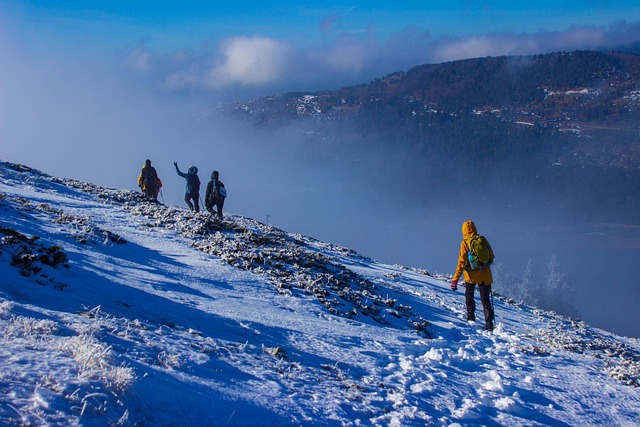
Cover photo: ali_kizildag on Pixabay.
Old Ranger Days is research-based: we work from verified specifications and official sources, and never claim hands-on testing unless it happened. Some links may be affiliate links. Editorial policy · Affiliate disclosure
