Old Ranger Days
Clothing & Footwear
Glacier Glasses vs Sunglasses for Winter Hiking
In this guide
- Glacier Glasses vs Sunglasses: The Practical Difference
- Why Snow Blindness Changes the Decision
- Four Criteria That Matter More Than Marketing
- Which Eye Protection Fits Your Route?
- Two Manufacturer-Specified Glacier Glasses to Compare
- Fit Checks Before You Leave the Trailhead
- Frequently Asked Questions
- Bottom Line
- Official Sources
Quick answer: For a snowy day hike below treeline, a close-fitting pair of sunglasses that blocks 99–100% of UVA and UVB can be enough. Choose glacier glasses when the route spends hours on exposed snowfields, glaciers, or high alpine terrain where light can enter from the sides. Choose goggles when wind, blowing snow, or falling snow makes a sealed fit more important than compactness. Lens darkness, UV protection, polarization, and side coverage are separate features—do not judge protection by tint alone.
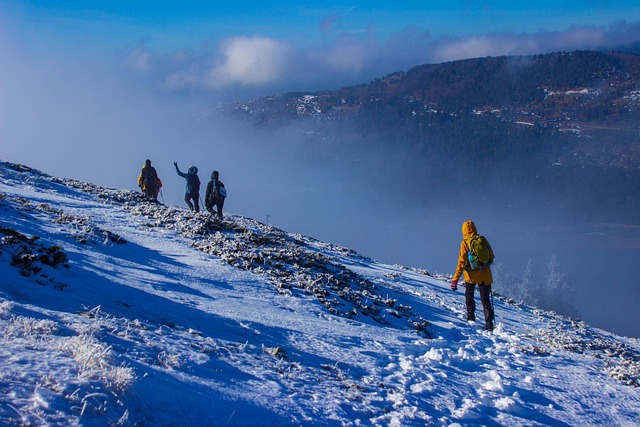
That distinction matters as winter arrives on U.S. trails. Rocky Mountain National Park warned of changing high-elevation snow and ice in its October 22, 2026 trail update. Conditions change quickly; check the latest official report before hiking. A route can therefore move from ordinary fall hiking into a bright, reflective winter environment within a few miles.
Glacier Glasses vs Sunglasses: The Practical Difference
Regular hiking sunglasses protect the eyes through UV-filtering lenses and a frame that limits direct sunlight. Good wraparound models also reduce light entering at the temples. They are usually lighter, easier to ventilate, and more useful across mixed forest and open terrain.
Glacier glasses add coverage around the frame. Removable or fixed side shields block reflected light that ordinary frames leave exposed. Many high-mountain models also use very dark Category 4 lenses or photochromic lenses that can reach Category 4. That combination is intended for prolonged exposure to snow, ice, and altitude—not for every winter walk.
Goggles cover more of the face and shield the eyes from wind-driven snow. They are often the better choice for storms, exposed ridgelines in strong wind, skiing, and above-treeline travel where spindrift can make sunglasses uncomfortable. Their tradeoffs are bulk, heat, and fogging during hard uphill effort.
| Option | Best use | Side protection | Weather protection | Main limitation |
|---|---|---|---|---|
| Wraparound sunglasses | Lower-elevation snow, mixed forest, short winter hikes | Moderate | Low | Light can enter around the frame |
| Glacier glasses | Exposed snowfields, glaciers, high alpine routes | High | Moderate | Dark models can be too dim in shade |
| Goggles | Blowing snow, high wind, storms, skiing | Very high | High | Bulk and uphill fogging |
Why Snow Blindness Changes the Decision
Snow blindness is photokeratitis: a sunburn-like injury to the cornea caused by intense ultraviolet exposure. The CDC notes that UV reflected from snow can nearly double the UVB reaching the eyes. Symptoms may be delayed, so a hiker can continue accumulating exposure before pain, tearing, gritty sensation, light sensitivity, or swollen eyelids appear.
This is not only an expedition problem. Yellowstone National Park calls sunglasses essential in winter because reflected sunlight increases snow-blindness risk. Yosemite winter rangers have also documented severe snow blindness in the backcountry. If eye pain or vision changes develop, leave the exposure, avoid rubbing the eyes, and seek medical care—especially for severe pain, persistent symptoms, or reduced vision.
Four Criteria That Matter More Than Marketing
1. Verified UVA and UVB protection
Look for labeling that states 99–100% UVA and UVB protection or UV400 protection. A dark lens without verified UV filtering can reduce visible light while still allowing harmful UV to reach the eye. Darkness is not proof of UV protection.
2. Coverage from the sides and below
Snow reflects light upward, while open alpine terrain exposes the eyes from the sides. A close wrap helps. Glacier glasses go further with side shields and often a nose cover or brow protection. Check for gaps by looking in a mirror while wearing the glasses with your hat, hood, or helmet.
3. Lens category and visible light transmission
Visible light transmission (VLT) describes how much visible light passes through a lens. Lower VLT means a darker lens. Category 3 lenses are versatile for strong sun. Category 4 lenses are designed for very intense light and reflected glare in high mountains. They can be excellent on open snow and uncomfortably dark in forest, at dusk, or inside a vehicle.
Never drive in Category 4 eyewear. Manufacturers warn that the strong filtration can impair the view of the road and surroundings. Carry a separate driving pair if your glacier glasses use a fixed Category 4 lens.
4. Polarization, contrast, and fog control
Polarization can reduce glare from snow and water, but it is not a substitute for UV protection. It may also make some phone, GPS, or vehicle displays harder to read at certain angles. Lens color and contrast can help reveal surface texture, yet fit and verified UV protection remain the first checks.
For fog control, match ventilation to effort. Start climbs slightly cool, keep face coverings from directing warm breath upward, and avoid pushing glasses tightly under a hat if it blocks vents. Goggles with double lenses and vents manage cold wind well, but even they can fog if overdressed or if snow clogs the vents. If your face covering sends breath toward the lenses, compare coverage and ventilation options in our balaclava vs neck gaiter winter hiking guide.
Which Eye Protection Fits Your Route?
Choose regular wraparound sunglasses when
- The route stays mostly below treeline with intermittent snow.
- You expect frequent transitions between sun and shade.
- The trip is short and the forecast calls for light wind.
- The frame wraps closely and the lenses have verified UVA/UVB protection.
This is often reasonable for forested Northeast trails, low-elevation winter routes in the Appalachians, and sunny walks in the Upper Midwest. Carrying a spare pair still matters: a broken lens can end a trip when the ground is fully snow-covered.
Choose glacier glasses when
- You will spend hours above treeline or on a snowfield.
- The route includes glacier travel, spring snow climbing, or a high alpine pass.
- Ordinary sunglasses leave bright gaps at the temples or below the frame.
- You need side shields and a secure fit under a hood or helmet.
Examples include the Muir Snowfield on Mount Rainier, exposed spring routes in Colorado, Sierra snowfields near Yosemite, and extended travel above treeline in the Cascades. Glacier glasses do not replace navigation, avalanche education, traction, or the judgment to turn around. Build the rest of the system with the cold-weather hiking gear and safety guide and the microspikes vs crampons guide.
Choose goggles when
- Blowing snow or spindrift repeatedly gets behind sunglasses.
- Strong wind makes your eyes water or forces you to squint.
- You are skiing, snowshoeing in a storm, or traveling on an exposed ridge.
- Your lens is appropriate for the forecast, including flat light.
For long winter days, pack an eyewear system rather than one perfect lens: sunglasses or glacier glasses for clear conditions, goggles for wind and snowfall, and a protected spare. Pair that redundancy with a reliable hiking headlamp and a firm turnaround time before dark.
Two Manufacturer-Specified Glacier Glasses to Compare
Affiliate disclosure: As an Amazon Associate, Old Ranger Days earns from qualifying purchases. This article currently contains no Amazon shopping links. We have not personally tested the models mentioned.
These are manufacturer-specification examples, not hands-on test winners. Confirm the exact model code and lens variant with the manufacturer before purchasing; one frame name can have several different lens options.
Julbo Explorer 2.0 Alti Arc — for fixed, very bright high-alpine use
Best use: prolonged travel on exposed snow, glaciers, and high mountain terrain. Ideal buyer: a mountaineer who wants Category 4 protection, removable side shields, and a large-face fit. Key limitation: the Alti Arc mineral lens is optically clear and scratch resistant, but heavier and more vulnerable to impact than polycarbonate. Its 7% VLT is too dark for many shaded trails, and Category 4 lenses must not be used for driving.
View Julbo Explorer 2.0 Alti Arc manufacturer specifications
Julbo Shield M REACTIV 2–4 Polarized — for variable high-mountain light
Best use: exposed winter hiking when sun and cloud alternate. Ideal buyer: a smaller- or medium-face user who wants removable side shields and a photochromic lens. Julbo specifies a Category 2–4 polarized range with 20–5% VLT for this lens family. Key limitation: photochromic behavior varies with the lens technology, UV exposure, and the exact variant; it will not replace a low-light goggle in a storm. Verify that the exact product variant uses the REACTIV 2–4 Polarized lens rather than a fixed-tint Shield M lens.
View Julbo Shield M REACTIV 2–4 Polarized manufacturer specifications
Fit Checks Before You Leave the Trailhead
- Read the lens label for UVA/UVB protection, category, and VLT.
- Wear the glasses with your winter hat, hood, helmet, and face covering.
- Check for bright gaps at the sides, brow, and lower edge.
- Walk uphill for several minutes and check slipping and fogging.
- Confirm that you can read your phone, GPS, and watch through polarized lenses.
- Pack the glasses in a rigid or semi-rigid case and carry a usable spare.
A hood can push temples inward, a face covering can send breath directly onto the lenses, and a helmet can lift the frame off the nose. Test the complete system at home. If the forecast adds wind or precipitation, use the same systems approach when choosing between a softshell and hardshell jacket.
Frequently Asked Questions
Are normal sunglasses enough for snow hiking?
They can be for short, mostly forested hikes if they block 99–100% of UVA and UVB, wrap closely, and stay secure. Long exposure on open snow increases the value of side shields and darker high-mountain lenses.
Do polarized lenses prevent snow blindness?
Polarization reduces reflected glare but does not by itself prove UV protection. Choose verified UVA/UVB protection first, then use polarization as a glare-management feature.
Are Category 4 lenses always better?
No. They are intended for very intense light and can be too dark under trees, in heavy cloud, or late in the day. They are also not suitable for driving.
Can I use ski goggles instead of glacier glasses?
Yes, especially in wind and falling snow. For calm uphill hiking, glacier glasses are usually lighter and better ventilated. Make sure the goggle lens matches the light level and has verified UV protection.
Do clouds remove the need for eye protection?
No. UV reaches hikers on cloudy and cool days, and snow continues to reflect it. Flat light can also make terrain harder to read, so choose a lens that balances protection with usable contrast.
What should prescription-glasses users do?
Look for prescription-ready glacier frames, prescription inserts, or over-glasses goggles. Confirm side coverage and peripheral vision with an optician, and carry a protected backup that you can navigate in.
Bottom Line
Use wraparound sunglasses for lower-risk mixed terrain, glacier glasses for prolonged exposed snow and high alpine routes, and goggles for wind and storms. The safest choice is the one that combines verified UV protection, coverage, a lens suited to the actual light, and a fit that works with the rest of your winter kit. Recheck the park forecast and trail conditions before leaving; early snow can turn an ordinary fall hike into a high-glare winter route quickly.
Official Sources
- Rocky Mountain National Park trail conditions
- Yellowstone National Park winter safety
- CDC Yellow Book: sun exposure and snow blindness
- National Eye Institute: protecting eyes from UV
- Julbo Explorer 2.0 Alti Arc specifications
- Julbo high-mountain lens guide
Old Ranger Days is research-based: we work from verified specifications and official sources, and never claim hands-on testing unless it happened. Some links may be affiliate links. Editorial policy · Affiliate disclosure