 Old Ranger Days
USA Outdoor Weekly
USA Outdoor Weekly: Wildfire Closures, Heat and Recall Alerts (Aug. 23–29, 2026)
In this guide
- The five-minute U.S. outdoor briefing
- 1. National fire activity remains at the highest preparedness level
- 2. Washington fire closures complicate PCT and Pasayten travel
- 3. Another Boundary Waters access point reopens
- 4. NOAA flags heat, drought and a sharp temperature contrast
- 5. Cuisinart grill-brush recall expands before Labor Day
- What to do before a Labor Day outdoor trip
- Five useful products for this week’s conditions
- Official sources used this week
Quick answer: The biggest U.S. outdoor story for Aug. 23–29, 2026, was the national wildfire posture. The country remained at Preparedness Level 5 on Aug. 29, while new and adjusted closures affected Washington’s Pacific Crest Trail and Pasayten Wilderness. Minnesota reopened another Boundary Waters access point, NOAA flagged both extreme heat and possible high-elevation freezes for the week ahead, and a major grill-brush recall expanded just before Labor Day weekend.
This weekly briefing is for trip planning, not a substitute for a ranger station, current closure order, local forecast or emergency alert. Conditions and restrictions can change after publication.
The five-minute U.S. outdoor briefing
- Wildfire: The National Interagency Fire Center reported 92 large fires and 21,371 personnel assigned nationwide on Aug. 29.
- Washington trails: Several fire closures intersect or influence PCT travel, including the Sisi, Three Queens and Ptarmigan incidents.
- Boundary Waters: Superior National Forest reopened more recreation areas for day use on Aug. 29, including BWCAW Entry Point #12 at Little Vermilion Lake, while other restrictions remain.
- Weather: NOAA’s Aug. 29 outlook shows a moderate risk of extreme heat across parts of the central and southern United States for Sept. 6–8, plus possible first freezes at higher elevations in the northern interior West.
- Recall: CPSC expanded the Cuisinart grill-brush recall to more than 3.6 million brushes because wire bristles can detach and be swallowed.
1. National fire activity remains at the highest preparedness level
On Aug. 29, the National Interagency Fire Center kept the United States at Preparedness Level 5, the highest level on its five-point scale. NIFC listed 100 new fires during the previous day, four new large fires and 92 large fires in total. Year-to-date acreage had passed 8.1 million acres—well above the 10-year average for the same point in the season.
The practical consequence is resource competition and faster-changing local conditions, not a blanket ban on recreation. Travelers should check the land manager’s alert page the evening before departure and again before leaving cell service. In dry country, confirm whether the order allows pressurized gas stoves; some Stage 2 restrictions permit them under stated conditions while prohibiting wood and charcoal fires.
If smoke, ash or visibility is part of the forecast, use our wildfire smoke and AQI decision guide. For meals during restrictions, see campfire alternatives during fire bans.
2. Washington fire closures complicate PCT and Pasayten travel
The Okanogan-Wenatchee National Forest’s official alerts page showed several consequential changes during the week. A Three Queens Fire closure began Aug. 24 and covers specified roads, campgrounds, recreation sites and trails. The Ptarmigan Fire closure in the Pasayten Wilderness was reduced on Aug. 24 but remains active. A Sisi Fire order that began Aug. 22 includes the Pacific Crest Trail within the Chelan Ranger District.
This is exactly the kind of situation where an older downloaded map is insufficient. A closure can shrink without disappearing, and a PCT section may be affected even when the trailhead you planned to use looks open. Read the current order and map, note the order number, then compare it with your entire route—including exit trails and shuttle roads. Do not route around a closure boundary cross-country.
For trips beyond reliable cell service, our satellite communicator guide explains what messaging and SOS devices can and cannot do. They improve communication; they do not authorize entry into a closed area.
3. Another Boundary Waters access point reopens
Superior National Forest announced that additional recreation areas would reopen for day use effective Saturday, Aug. 29. The update includes Boundary Waters Canoe Area Wilderness Entry Point #12 at Little Vermilion Lake. The forest’s reopening notice is encouraging, but it does not mean every route, campsite or access road has returned to normal.
Before a BWCAW trip, compare your permit and planned entry point with the forest’s phased reopening and closure map. Check fire restrictions, portage access and smoke separately. If any link in the route is uncertain, build a legal alternative that starts from an open entry point rather than assuming a ranger can change the itinerary on arrival.
4. NOAA flags heat, drought and a sharp temperature contrast
NOAA’s Climate Prediction Center issued its latest U.S. hazards outlook on Aug. 29 for Sept. 6–12. It shows a moderate risk of extreme heat in parts of the Central and Southern Plains, Middle and Lower Mississippi Valley, western Tennessee and Ohio valleys, and the Southeast for Sept. 6–8. NOAA also identifies a slight risk of rapid-onset drought across parts of the Central and Southern Plains and Mississippi Valley.
Farther northwest, the same NOAA hazards outlook highlights a slight risk of much-below-normal temperatures on Sept. 6 across portions of the northern Great Basin, Rockies and High Plains. First frost or freezes are possible at higher elevations. That combination matters over Labor Day travel: a hot trailhead forecast does not rule out near-freezing overnight conditions several thousand feet higher.
Check the National Weather Service point forecast for the exact trail elevation, pack insulation for the coldest plausible overnight low and set a heat turnaround time. A NOAA weather radio can receive official broadcasts where reception exists, but it is not a two-way rescue device.
5. Cuisinart grill-brush recall expands before Labor Day
On Aug. 27, the U.S. Consumer Product Safety Commission expanded a recall of Cuisinart grill brushes. The CPSC notice says metal bristles can detach, remain on the cooking surface or food, and cause serious injury if swallowed. The expansion added about 1.9 million brushes and brought the total recalled to more than 3.6 million.
Owners should stop using the listed models and follow the recall instructions for a refund or Cuisinart credit. Do not rely on a visual check of the grate as a safety fix: a loose bristle can be difficult to see. This is a recall item, not a product recommendation.
What to do before a Labor Day outdoor trip
- Open the current NPS, USFS, BLM or state-agency alert page—not only a search-result snippet.
- Download the signed closure map and make sure your trail, alternate exit, campground and approach road are outside the boundary.
- Check AirNow, the NWS point forecast and local fire restrictions on the morning of departure.
- Tell a responsible person your route, vehicle location and check-in deadline.
- Carry lighting and enough insulation for an unplanned delay; late-summer days can still end with cold mountain nights.
- Inspect cooking tools and camp gear against current CPSC recalls before packing.
Five useful products for this week’s conditions
Disclosure: As an Amazon Associate, Old Ranger Days earns from qualifying purchases.
These are use-case suggestions based on current manufacturer documentation, not personal testing or a claim that any product makes an unsafe trip safe. Amazon availability and exact model revisions can change.
1. 3M Aura 9205+ N95 respirator — smoke contingency
Best use: A properly fitted particulate respirator kept in a vehicle or trip kit for short-term exposure to wildfire smoke and other non-oil particulates. Ideal buyer: Campers who want a compact NIOSH-approved backup for deteriorating air quality. Key limitation: Fit and seal are critical; it does not protect against gases or vapors, supply oxygen or justify staying in hazardous smoke. 3M states that the Aura 9205+ filters at least 95% of certain non-oil airborne particles when used correctly. Manufacturer information. View the 3M Aura 9205+ on Amazon.com.
2. Midland ER310 — vehicle and base-camp weather alerts
Best use: Receiving NOAA Weather Radio broadcasts at a vehicle campsite, cabin or evacuation staging point. Ideal buyer: Car campers who value rechargeable, solar and hand-crank power options. Key limitation: It cannot send an SOS or two-way message, and reception depends on terrain and transmitter coverage. Midland documents NOAA weather alert reception, a flashlight and multiple charging methods; check the exact battery specification of the listing because revisions may differ. Manufacturer information. View the Midland ER310 on Amazon.com.
3. MSR PocketRocket 2 — compact stove where permitted
Best use: Lightweight boiling on backpacking trips where the current fire order permits a pressurized canister stove. Ideal buyer: Solo hikers and small groups prioritizing low packed weight. Key limitation: It is not legal during every restriction, has no integrated ignition and performance can be affected by wind and cold. MSR lists a 2.6-ounce (73 g) weight and a claimed 3.5-minute boil time for 1 liter under its test conditions; fuel is sold separately. Manufacturer information. View the MSR PocketRocket 2 on Amazon.com.
4. Garmin inReach Mini 2 — off-grid messaging and SOS
Best use: Two-way satellite messaging, location sharing and interactive SOS beyond cellular coverage. Ideal buyer: Backpackers, paddlers and remote-road travelers who will maintain a compatible service plan. Key limitation: An active subscription is required for communication features, operation needs a useful view of the sky, and the device cannot replace navigation skills or closure compliance. Manufacturer information. View the Garmin inReach Mini 2 on Amazon.com.
5. Black Diamond Spot 400 — camp and trail lighting
Best use: Camp chores, predawn starts and emergency lighting. Ideal buyer: Hikers who want 400-lumen maximum output, red night vision and the flexibility to use three AAA batteries or Black Diamond’s optional BD 1500 rechargeable battery. Key limitation: The rechargeable battery is sold separately, and users should learn the controls before a night hike. Black Diamond rates the housing IPX8 and advises fully drying the battery compartment after submersion. Manufacturer information. View the Black Diamond Spot 400 on Amazon.com.
For broader comparisons, see our hiking headlamp guide and camp-stove decision guide.
Official sources used this week
- NIFC National Fire News — Aug. 29, 2026
- Okanogan-Wenatchee National Forest alerts — checked Aug. 29, 2026
- Superior National Forest recreation-area reopening notice
- NOAA Climate Prediction Center hazards outlook — issued Aug. 29, 2026
- CPSC Cuisinart grill-brush recall expansion — Aug. 27, 2026
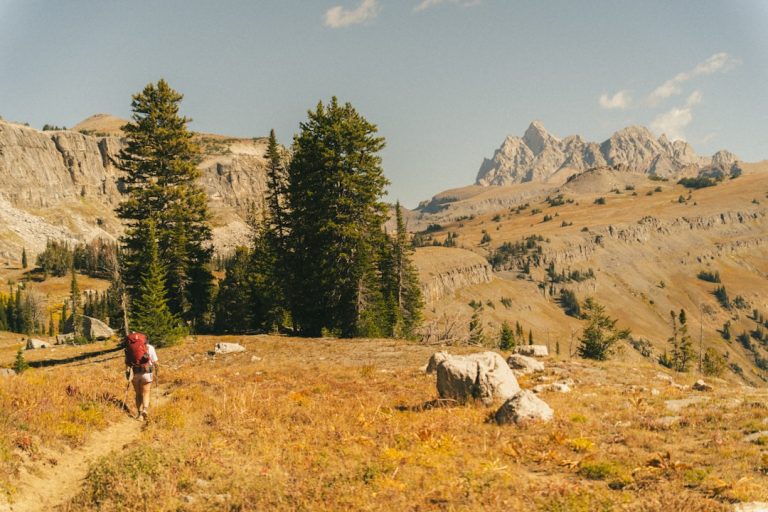
Featured stock photograph by Alex Moliski on Unsplash. An original, non-branded editorial replacement image has also been prepared for publication.
Old Ranger Days is research-based: we work from verified specifications and official sources, and never claim hands-on testing unless it happened. Some links may be affiliate links. Editorial policy · Affiliate disclosure