 Old Ranger Days
USA Outdoor Weekly
USA Outdoor Weekly: Fire Reopenings, Heat and Denali Access (Aug. 30–Sept. 5, 2026)
In this guide
- The five-minute pre-trip check
- 1. National wildfire demand drops to Level 4—but the season is not over
- 2. Boundary Waters reopening advances again
- 3. Colorado reopens Lake Isabel-area destinations with a closure core intact
- 4. Hawaiʻi Volcanoes reopens Kahuku after Hurricane Lala
- 5. Denali’s Pretty Rocks Bridge is complete; full bus access waits until 2027
- 6. Yosemite issues a bat-rabies alert
- 7. Heat index reaches 100–110°F in parts of the Midwest
- Recall desk: no new major hiking or camping recall found this week
- Five practical U.S.-market products to consider
- What to watch next week
- Official sources
Week covered: August 30–September 5, 2026. This briefing is for U.S. hikers, campers, backpackers, road-trippers and public-land visitors making near-term plans. Conditions can change after publication, so use the official links below as the final check—not this newsletter alone.
Quick answer: National wildfire demand eased slightly this week, but the country still had 78 large fires on September 5. Several fire- and storm-affected recreation areas reopened in Minnesota, Colorado and Hawaiʻi, while targeted closures and rough-road hazards remain. Denali reached a major access milestone for 2027, Yosemite issued a bat-rabies notice, and dangerous heat affected parts of the Midwest and Southeast.
The five-minute pre-trip check
Before leaving home, open the land manager’s alert page, check the National Weather Service point forecast, confirm fire restrictions, download an offline map and tell someone your route and return time. Our hiking safety checklist and fall camping checklist for U.S. National Parks turn those steps into reusable packing and planning routines.
1. National wildfire demand drops to Level 4—but the season is not over
On September 5, the National Interagency Fire Center reported that the national preparedness level had fallen from 5 to 4, effective September 4 at 7:30 a.m. MDT. The change reflected improving fire weather in several regions, better availability of shared resources and fewer resource orders.
That is encouraging, not an all-clear. NIFC still listed 78 large fires, six of them newly reported, with 17,812 firefighters and support personnel assigned. Year to date, 53,030 wildfires had burned more than 8.3 million acres. Washington, Montana and Idaho each reported at least 12 large fires.
For travelers, the practical rule is local before national. A lower nationwide level does not cancel a forest closure, evacuation notice or campfire restriction. Check the specific forest, park or BLM district, then consult the wildfire-smoke hiking safety guide if haze is present. Secure trailer chains and never leave a fire or grill until it is cold to the touch.
2. Boundary Waters reopening advances again
Superior National Forest announced a tenth phase of reopening on September 2. The adjusted closure exhibits returned additional wildfire-affected recreation areas in and around the Boundary Waters Canoe Area Wilderness to public use while leaving site-specific restrictions in place. Travelers should use the forest’s live BWCAW phased reopening page rather than relying on an older saved map.
A reopening does not mean normal conditions everywhere. Portages may have recently fallen trees, burned-area hazards can persist, and emergency response remains slow. Confirm the exact entry point and route, carry an offline map, and build a turnaround option that does not depend on crossing a closed corridor.
3. Colorado reopens Lake Isabel-area destinations with a closure core intact
On August 31, Pike–San Isabel National Forests said revised Aspen Acres Fire boundaries would take effect September 1. Reopened places included Ophir Creek, La Vista and South Side campgrounds; Mingus Ranch Cabin; roads around Lake Isabel; and the lake’s east and north parking areas.
The San Carlos Ranger District still retains a targeted closure around active operations and fire effects, and Stage 1 fire restrictions remained across several ranger districts when the notice was issued. A route that reaches an open campground can still pass close to closed roads or trails, so download the current order and map—not only the press release.
4. Hawaiʻi Volcanoes reopens Kahuku after Hurricane Lala
The Kahuku Unit of Hawaiʻi Volcanoes National Park reopened September 3 after heavy rain and strong winds from Hurricane Lala. Normal Thursday-through-Sunday hours resumed, but the road beyond Lower Palm Trailhead remained deeply rutted. NPS recommended four-wheel drive above that trailhead and kept Kahuku Road closed above the boot-decontamination station.
Hikers also need to watch for hanging branches, loose rock and uneven trail surfaces. This is a useful reminder that a gate reopening and a safe two-wheel-drive itinerary are different questions. If your vehicle, tires or experience do not match the road notice, choose the lower trails.
5. Denali’s Pretty Rocks Bridge is complete; full bus access waits until 2027
On September 3, Denali National Park and Preserve announced completion of the roughly 475-foot Pretty Rocks Bridge at mile 45 of Denali Park Road. It spans the active landslide that severed west-end road access in August 2021.
Hikers and cyclists have been able to travel west of East Fork and cross the bridge since August 27, but buses will continue to stop at East Fork for the remainder of the 2026 visitor season. NPS expects west-end bus service to return in 2027 after road and facility work. Anyone planning a 2027 Denali trip should treat this as a planning milestone, not a promise that every itinerary is bookable today.
6. Yosemite issues a bat-rabies alert
On September 2, Yosemite National Park reported that a dead big brown bat found outside the Curry Village Showerhouse on May 18 had tested positive for rabies. No known human contact was reported. NPS advised anyone who may have had direct contact with a bat in that area around May 18 to promptly contact the California Department of Public Health and a healthcare provider.
Bat bites and scratches can be tiny and may not be visible or painful. Never handle a live or dead bat; keep people and pets back and notify park staff. This notice is not a reason to fear bats, which are important wildlife. It is a reason to treat any direct contact as a medical question rather than waiting for symptoms.
7. Heat index reaches 100–110°F in parts of the Midwest
A September 5 National Weather Service Quad Cities briefing kept an Extreme Heat Warning in effect along and south of Interstate 80 in its Iowa–Illinois area, with heat-index values of 100–110°F. A Heat Advisory north of I-80 called for 100–105°F. NWS expected improvement on Sunday and Labor Day, but the episode shows why early September should not automatically be treated as cool-weather hiking.
For exposed trails, shorten the objective, start early, carry more water than a normal fall outing and turn around at the first signs of heat illness. Shade, pace and acclimatization matter; a bottle alone does not make a dangerous forecast safe.
Recall desk: no new major hiking or camping recall found this week
A review of the U.S. Consumer Product Safety Commission recall feed for August 30–September 5 did not identify a newly announced recall centered on mainstream hiking, backpacking or camping gear. That is a reporting result, not proof that every product is safe. Check model and serial numbers against the CPSC recall database before using older battery, heating, lighting or cooking equipment, and stop using any product named in an official notice.
Five practical U.S.-market products to consider
As an Amazon Associate, Old Ranger Days earns from qualifying purchases. The links below are standard Amazon.com product pages without an affiliate tag. Product fit depends on route, weather and skill; none replaces official alerts, training or conservative decisions.
Petzl ACTIK CORE 625-lumen headlamp
Best use: early starts, late finishes and campsite tasks. Ideal buyer: a frequent hiker who wants USB-C recharging plus Petzl’s hybrid ability to accept three AAA batteries. Key limitation: it is weather-resistant rather than a dive light, and the charging cable is not included. Petzl lists 625 lumens, 88 g (3.1 oz), white mixed-beam modes and red lighting. View the Petzl ACTIK CORE on Amazon.com.
Sawyer Squeeze SP129 water filter
Best use: backpacking routes with reliable freshwater sources and emergency kits. Ideal buyer: a hiker comfortable collecting and backflushing water. Key limitation: its 0.1-micron filter targets bacteria, protozoa and microplastics; it is not the choice for viruses, saltwater or chemically contaminated water. The SP129 kit includes the Squeeze filter and pouches. View the Sawyer Squeeze SP129 on Amazon.com.
Therm-a-Rest Z Lite Sol closed-cell foam pad
Best use: durable three-season ground insulation, a sit pad or backup beneath an inflatable pad. Ideal buyer: a backpacker who prioritizes simplicity and puncture-proof construction. Key limitation: the R-value is 2.0 and the folded pad is bulky, so it is not a stand-alone cold-ground solution for many sleepers. The regular size is listed at 72 × 20 in. and 14 oz. View the Therm-a-Rest Z Lite Sol on Amazon.com.
Adventure Medical Kits Ultralight/Watertight .5
Best use: one- to two-day hikes, paddling trips and wet-weather day packs for two people. Ideal buyer: someone who wants a compact base kit they can customize with personal medication and skills-specific items. Key limitation: a small prebuilt kit cannot cover every trauma, illness or group need, and used or expired supplies must be replaced. The manufacturer lists a 3.6 oz kit with a waterproof DryFlex inner bag. View the Ultralight/Watertight .5 on Amazon.com.
Nalgene Sustain 32-ounce wide-mouth bottles, two-pack
Best use: measuring and carrying water for day hikes, camp kitchens and car-based trips. Ideal buyer: a household that wants simple, leakproof, easy-to-clean bottles with printed graduations. Key limitation: these bottles are not insulated, and 32 fl oz per bottle may be inadequate for hot or dry routes without refill points. The listing is a two-pack of wide-mouth Sustain Tritan bottles. View the Nalgene Sustain two-pack on Amazon.com.
For a broader pack audit, see the Old Ranger Days outdoor gear guide. If your route loses cellular coverage, review the separate satellite safety devices guide before deciding whether a communicator belongs in your system.
What to watch next week
Watch for local fire-restriction changes even as national demand eases, updated BWCAW closure maps, post-storm road repairs in Hawaiʻi, and Denali’s 2027 transportation details. In the Midwest and Southeast, keep using point forecasts instead of assuming that September means cool weather. For every reopened area, the operative question is not merely “Is it open?” but “Is my exact route, access road and skill set appropriate today?”
Official sources
NIFC National Fire News · Superior National Forest BWCAW phased reopening · Pike–San Isabel reopening notice · Hawaiʻi Volcanoes Kahuku notice · Denali Pretty Rocks Bridge notice · Yosemite rabies notice · NWS Quad Cities heat briefing · CPSC recalls
Manufacturer documentation: Petzl ACTIK CORE · Sawyer Squeeze · Therm-a-Rest Z Lite Sol · Adventure Medical Kits .5 · Nalgene 32 oz bottles.
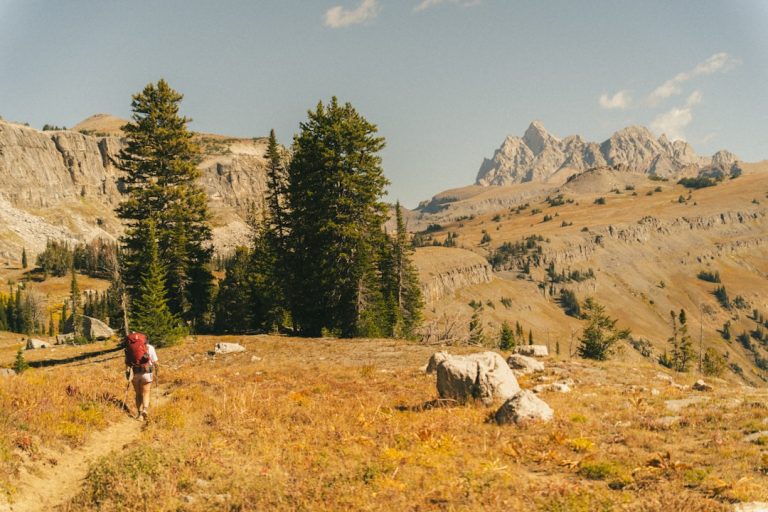
Featured photo credit: Alex Moliski / Unsplash. Editorial reporting and product notes are original to Old Ranger Days; no competitor testing claims or rankings are reproduced.
Old Ranger Days is research-based: we work from verified specifications and official sources, and never claim hands-on testing unless it happened. Some links may be affiliate links. Editorial policy · Affiliate disclosure