 Old Ranger Days
Trail Safety
Tent Heater Safety: Can You Use a Propane Heater in a Tent?
Never sleep with a propane heater running in a tent. The CDC says opening a flap does not stop carbon monoxide. Warm the sleeper instead.
In this guide
Do not run a propane heater, camp stove or lantern inside a tent, and never while anyone sleeps, say the CDC and CPSC. Opening the flaps does not stop carbon monoxide building up, the CDC adds. The safe way to heat a tent at night is to heat the person: a warmer bag, an insulated pad, dry layers and food.
Carbon monoxide has no color or smell. The CDC says more than 400 Americans die every year from unintentional, non-fire carbon monoxide poisoning. It says sleeping people can die before they feel a symptom.
We did not test heaters. This guide comes from the CPSC, CDC, National Park Service, U.S. Fire Administration, manufacturer pages and one long field trial by Outside.
The short version
- Never sleep with a fuel-burning heater, stove, lantern or charcoal grill running in a tent.
- A cracked door or window does not make it safe, says the CDC.
- "Indoor safe" on the box does not override the CPSC rule for tents.
- At home, keep anything that can burn at least 3 feet from any heater, says the U.S. Fire Administration.
- Turn every heater off before you go to sleep, electric ones included.
- If you suspect carbon monoxide poisoning, get everyone into fresh air first, says Anevay.
- For warmth all night, upgrade the pad, the bag and your dry layers instead.
Are propane heaters safe in a tent?
Not for sleeping, and official guidance says not at all. The CPSC says people die every year from camping heaters, lanterns and stoves used inside tents, campers and vehicles. Its rule is short: do not use them while sleeping in enclosed areas.
The CDC goes further. Its report on camping deaths says stoves, heaters, lanterns and charcoal grills should never be used inside a tent or other enclosed shelter. It adds that opening tent flaps, doors or windows does not prevent carbon monoxide from building up.
That report describes two Georgia cases from March 1999. A man and three children died in a zipped 10 by 14 foot tent with a propane stove still burning, apparently brought in for warmth. Thirteen days later a father and his 7-year-old son died after a charcoal grill was carried into their tent.
What about "indoor safe" heaters like the Mr. Heater Buddy?
Mr. Heater says its Buddy heaters have an oxygen depletion sensor and a tip-over shut-off. It calls them "indoor* safe" and "excellent for use while camping". The footnote restricts them from all indoor use in Massachusetts and Canada, and from use in dwellings in California.
The sensor watches oxygen. Outside's Nathan Norby reports that quality propane heaters shut off near the oxygen level of about 7,000 feet. So they should not run higher up. The CPSC also warns that carbon monoxide risk is higher at high altitude.
Norby's own verdict after using a Buddy in his tent: turn it off before you go to sleep. He also found burning propane filled the tent with water vapor, so he slept colder once it was off.
The CDC's advice covers every camping heater: never inside a tent.
Can tent fabric catch fire from a heater?
Yes. REI explains that camping tents are treated to meet a flammability standard called CPAI-84. California's required warning label is blunt. It says to keep all flame and heat sources away from the tent fabric. It says the fabric is "not fire proof" and will burn if left in continuous contact with any flame.
REI gives the same advice in plain words: avoid heat sources inside your tent, including stoves, lanterns and candles.
The U.S. Fire Administration says portable heaters caused 3% of home heating fires in 2017 to 2019, but 41% of the fatal ones.
How do you heat a tent with electricity?
Outside's Nathan Norby spent two years trying options and ended up with battery-powered heat for car camping.
His numbers show the limits. A 100-watt heated blanket would drain a 500 Wh power station in about five hours. A 1,500 Wh unit ran the same blanket all night for two nights. A small cubicle heater drew 100 watts on low and 225 on high, about 15 hours or 6.5 hours from that battery.
In his test the small heater warmed the tent to 60 °F (16 °C) with 36 °F (2 °C) outside. He warns the gap shrinks in colder weather. He says you still need ventilation for moisture, and the battery should be kept warm because batteries dislike sub-freezing temperatures.
Norby left his heater on low through the night, but the U.S. Fire Administration says to turn space heaters off when going to bed. Follow the stricter rule. His 100-watt heated blanket also proved effective.
What about hot tent safety?
A hot tent is a different system: a shelter built for a wood stove, with a chimney that carries smoke out. Anevay, a tent-stove maker, says most camping carbon monoxide deaths involve barbecues and gas heaters, not flued stoves.
Anevay's rules are strict. Fit the stove only in a well-ventilated, fire-retardant shelter, as the maker instructs. Keep a door open and do not go to sleep while it is lit. Place a carbon monoxide alarm centrally at head height, about 3 feet (1 m) from the stove, and test it regularly.
Outside's tester found the titanium stove in his hot tent burned about half an hour unattended. Expect to tend it, not sleep through it. An ordinary tent is not built for this: its label says to keep all heat sources away.
What is the safest way to stay warm in a tent?
Warm the sleeper, not the air. The CDC tells campers to bring adequate bedding and clothing, and to eat extra calories and drink fluids to prevent hypothermia.
- Insulate from the ground. Our sleeping pad R-value guide shows what rating to match to the night.
- Use a bag rated for the low. See the fall camping sleep system guide and 20 °F vs 30 °F sleeping bags.
- Stay dry. The National Park Service says to choose wool or synthetic over cotton, which won't keep you warm wet. Carry dry clothes in a sealed bag.
- Vent the tent. Outside's tester says breath, body and clothes add water vapor overnight. Our tent condensation guide explains how to vent it.
For a winter shelter, see our 3-season vs 4-season tent guide.
Does a carbon monoxide alarm make a heater safe?
No. An alarm warns you. It does not change the CPSC and CDC advice against fuel-burning heaters in a tent. Kidde markets its battery Nighthawk alarm for the home and lists it for 40 °F (4.4 °C) to 100 °F (37.8 °C).
Anevay recommends an alarm in a hot tent. For home alarms, the CDC says to replace them when the maker says, or every 5 years.
When to turn around or call for help
Leave the tent at once if anyone near a heat source has a headache, dizziness, weakness, nausea, vomiting, sleepiness or confusion. The CPSC lists these as carbon monoxide symptoms and says they are easily mistaken for a cold or flu.
- Get everyone out of the tent and into fresh air first, as Anevay advises.
- Seek medical help immediately if you suspect carbon monoxide poisoning, Anevay says.
- See a doctor if anyone has cold or flu-like symptoms while camping, as the CPSC advises.
- Infants, the elderly and people with heart disease or breathing problems are more likely to get sick, the CDC says.
The National Park Service says to check the forecast on the day of your trip and to have a Plan B. It adds that if conditions are too hazardous, it is okay to stay indoors. The NPS lists hypothermia warning signs as confusion, shivering, difficulty speaking and stiff muscles. Our hypothermia guide covers what to do.
For more trip planning, start at the hiking safety guide and the cold-weather hiking gear and safety hub.
Frequently asked questions
Can you put a propane heater in a tent?
Not while anyone sleeps, and official guidance says not at all. The CPSC says never use fuel-burning portable heaters while sleeping in tents. The CDC says camping heaters should never be used inside a tent. It adds that opening flaps, doors or windows does not prevent carbon monoxide buildup.
Does the oxygen sensor on a Buddy heater make it safe in a tent?
No. Mr. Heater says its Buddy heaters have an oxygen depletion sensor and a tip-over shut-off. Outside reports that quality propane heaters have an oxygen sensor that shuts them off near the oxygen level of about 7,000 feet. It does not change the CPSC rule against running fuel-burning heaters while you sleep in a tent.
Is it safe to sleep with an electric heater in a tent?
Not with it running. The U.S. Fire Administration says to turn space heaters off when going to bed. It also says to keep anything that can burn at least 3 feet away. Outside's tester found a 100-watt heated blanket effective.
Can I use a camp stove to warm up the tent?
No. The CDC says never use a portable gas camp stove indoors. In one Georgia case the CDC reported, a man and three children died in a zipped tent with a propane stove still burning inside. The CDC also says the exhaust of outdoor fuel-burning devices should not vent into a shelter.
Are hot tents safe?
Not risk-free. Anevay, a tent-stove maker, says to fit stoves only in well-ventilated, fire-retardant shelters. It says to keep a door open, never sleep while the stove is lit, and use a carbon monoxide alarm.
Sources
- U.S. Consumer Product Safety Commission: Portable Heaters and Camping Equipment
- CDC MMWR: Carbon Monoxide Poisoning Deaths Associated with Camping, Georgia, March 1999
- CDC: Carbon Monoxide (CO) Poisoning Basics
- National Park Service: Be Winter Ready For Your Adventure
- U.S. Fire Administration: Heating Fire Safety
- California Code of Regulations, Title 19, Section 335: Labeling of Tents
- Mr. Heater: Buddy Family FAQ
- Kidde: Nighthawk Battery Operated Carbon Monoxide Alarm KN-COB-B-LP
- Outside: How to (Safely) Heat a Tent
- Anevay Stoves: Carbon Monoxide, How To Stay Safe When Using a Stove in a Tent
- REI Uncommon Path: Understanding Flame Retardants in Camping and Backpacking Tents
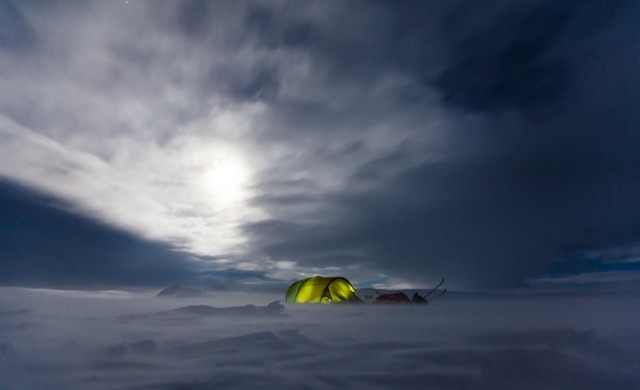
Cover photo: Pexels on Pixabay.
Old Ranger Days is research-based: we work from verified specifications and official sources, and never claim hands-on testing unless it happened. Some links may be affiliate links. Editorial policy · Affiliate disclosure