 Old Ranger Days
In this guide
- Quick answer: the hot-weather trail running plan
- 1. Plan for the trail, not just the temperature
- 2. Build an individualized hydration plan
- 3. Pace by effort, not by your cool-weather splits
- 4. Use precommitted turnaround rules
- 5. Recognize heat illness early
- 6. Clothing, sun protection and cooling
- 7. Communication and emergency backup
- Hot-weather trail running checklist
- Frequently asked questions
- Bottom line
- Official U.S. safety resources
Trail running in hot weather changes the cost of every mile. A pace that feels relaxed on a cool morning can become unsustainable when direct sun, humidity, exposed rock and limited water add up. The safest strategy is not to chase a normal finish time. It is to begin with a conservative plan, monitor effort and symptoms, and turn around before a manageable problem becomes an emergency.
This guide explains practical hydration, pacing and turnaround rules for hot-weather trail running in the United States. It is general education, not personal medical advice. Health conditions and some medications can affect heat tolerance, so seek individualized guidance when appropriate.
Quick answer: the hot-weather trail running plan
- Check the hourly forecast, National Weather Service alerts, HeatRisk and local air quality before leaving.
- Choose a shorter route with shade, reliable water or early exit points.
- Run by effort instead of your normal pace; slow down before you feel overheated.
- Carry a hydration capacity based on the route, conditions and your tested needs—plus a reserve.
- Do not force excessive water. Both dehydration and overdrinking can be dangerous.
- Turn around immediately if symptoms appear, your water reaches its preplanned reserve, conditions exceed the forecast or your partner is struggling.
- Treat confusion, collapse, seizure or loss of consciousness as an emergency: call 911 and begin rapid cooling while help is on the way.
1. Plan for the trail, not just the temperature
The number on a weather app is only part of the risk. Humidity can make sweating less effective. Full sun can feel much hotter than shade. Dark rock, canyon walls and windless climbs can increase heat exposure, while a remote route makes a small mistake harder to correct.
Review the hourly forecast for the entire outing, not only the start. Check for heat advisories, excessive heat warnings, thunderstorms and wildfire smoke. The National Weather Service heat index combines temperature and humidity, while HeatRisk adds context about expected health impacts. Also check AirNow when smoke or ozone may affect breathing.
Then compare the forecast with the route:
- How much of the trail is exposed?
- Where are the last dependable water source and shaded rest area?
- Are those water sources currently flowing, and will you treat the water?
- Where can you shorten the run or exit early?
- Is the hardest climb late in the route?
- Will your vehicle be dangerously hot when you return?
On high-risk days, the best adjustment is often an early start, a shaded loop close to the trailhead, a shorter run or an indoor alternative. A planned retreat is good judgment, not a failed workout.
2. Build an individualized hydration plan
There is no single ounces-per-hour rule that works for every runner. Sweat rate varies with body size, pace, heat acclimatization, humidity, clothing and terrain. Route duration and access to reliable water matter too. A short shaded run near town is different from a long exposed ridge with no refill point.
Before the run
- Begin normally hydrated rather than trying to “tank up” immediately before the start.
- Use a bottle or hydration vest you have already tested for bouncing, leaks and access while moving.
- Map every refill and confirm current conditions with the land manager or a recent reliable report.
- Carry treatment appropriate for backcountry water; clear-looking water is not automatically safe.
- Set a protected reserve that is not part of your optimistic mileage estimate.
During the run
Drink in response to thirst and your practiced plan, adjusting for conditions and effort. Do not ignore thirst, but do not force large amounts simply because a generic schedule says so. The CDC Yellow Book warns that forced overdrinking during prolonged exercise can contribute to exercise-associated hyponatremia, a dangerous dilution of blood sodium.
For longer, hotter or very sweaty outings, electrolytes and salty foods may be useful, but they do not replace water and they do not make excessive drinking safe. If you repeatedly finish with severe headaches, nausea, swelling, confusion or major weight changes, stop experimenting on remote trails and discuss your plan with a qualified clinician or sports dietitian.
3. Pace by effort, not by your cool-weather splits
Heat raises cardiovascular strain, so normal trail pace is a poor target. Start slower than feels necessary and keep the first climb controlled. A simple talk test is useful: during an easy run, you should be able to speak in complete sentences. If you can only answer in short phrases, reduce effort, hike the climb or stop in shade.
Use perceived exertion, breathing, coordination and decision-making as your dashboard. Pace naturally varies with grade and footing; the goal is to prevent effort from drifting upward unnoticed. Schedule short shade stops before you need them, remove unnecessary layers and wet a bandana or clothing when safe water is available.
Acclimatize gradually
Heat acclimatization develops through repeated exposure, not one heroic outing. The CDC notes that much of the process can occur over about 10 days. During the first week of hot conditions—or after travel from a cooler climate—reduce both intensity and duration. Increase only when easy sessions remain controlled and recovery is normal.
4. Use precommitted turnaround rules
Turnaround decisions get harder after you have invested time in a route. Make the decision while you are cool, rested and objective. Write the rules into your route plan and share them with your partner.
- Water rule: Turn around when usable water reaches your protected reserve before the planned turnaround point. Do not assume an unverified spring will solve the problem.
- Symptom rule: Stop and retreat for unusual weakness, dizziness, headache, nausea, chills, cramping, poor coordination or a sudden unexplained drop in performance.
- Effort rule: If an easy pace no longer feels easy after slowing and resting in shade, shorten the route.
- Exposure rule: Turn back if the route ahead has no shade, refill or safe exit and conditions are hotter than planned.
- Partner rule: The person showing the earliest warning sign sets the turnaround time.
- Forecast rule: Retreat if a heat warning, thunderstorm, wildfire smoke or air-quality problem develops sooner than expected.
- Time rule: Set a clock time that protects your return from the hottest part of the day, even if you have not reached the objective.
You may see advice to turn around after using half your water. That can be a useful rule on some out-and-back hikes, and certain parks recommend it locally, but it is not universal. The return may be hotter, slower or more exposed than the approach. Your reserve should account for the specific route, expected deterioration and the possibility of helping a partner.
5. Recognize heat illness early
Early heat-related symptoms can include heavy sweating, headache, nausea, dizziness, weakness, irritability, thirst, muscle cramps and reduced performance. Stop running, move to shade or air conditioning if available, remove excess clothing, cool the skin and arrange a safe exit. Do not leave an ill person alone.
Confusion, altered behavior, collapse, seizure, loss of consciousness or very hot skin can signal a life-threatening emergency. Call 911 immediately. Begin rapid cooling while waiting for emergency responders: move the person out of the sun, remove excess clothing and use cold water, wet towels, ice packs at the neck/armpits/groin or cold-water immersion when practical and safe. Do not give fluids to someone who is confused or unable to swallow safely.
The CDC’s heat-related illness guidance provides symptom and first-aid details. When in doubt, treat worsening mental or physical changes as an emergency rather than trying to diagnose the condition on the trail.
6. Clothing, sun protection and cooling
- Choose lightweight, breathable clothing that does not chafe when wet.
- Use a cap or ventilated hat based on the amount of direct sun.
- Apply broad-spectrum sunscreen and reapply according to its label.
- Protect exposed skin with sunglasses and UPF clothing when appropriate.
- Carry a small bandana or buff that can be wetted for cooling.
- Avoid testing new shoes, packs, supplements or clothing on a high-consequence route.
Minimal clothing is not always the coolest option in intense sun. A light sun hoodie can reduce radiant exposure, but only if the fabric and fit allow heat to escape. Test your setup during short runs near an easy exit.
7. Communication and emergency backup
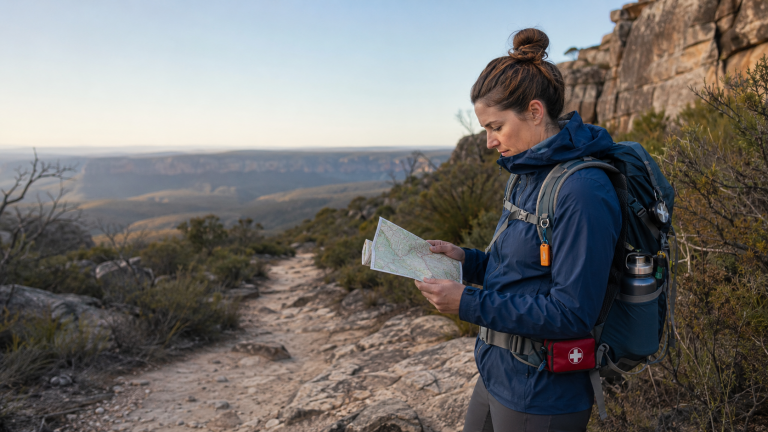
Leave a route plan with a reliable person, including the trailhead, route, turnaround time, vehicle description and the time they should contact authorities. Download offline maps and know the nearest road, ranger station or staffed facility. Cell service is a bonus, not a plan.
For remote routes, learn the difference between a personal locator beacon and a two-way satellite messenger in our PLB vs. satellite communicator guide. Also review the broader hiking safety guide and this hiking safety checklist for crowded or viral trails.
Hot-weather trail running checklist
- Hourly forecast, NWS alerts, HeatRisk and AirNow checked
- Shorter route, shade and early exits identified
- Water sources verified and treatment packed
- Hydration capacity plus protected reserve carried
- Effort target and turnaround time agreed
- Sun protection and tested clothing packed
- Offline map, charged phone and emergency communication ready
- Route plan shared with a trusted contact
- Symptoms and emergency cooling steps reviewed with partner
Frequently asked questions
What is the best time to trail run in hot weather?
Usually the coolest safe daylight window, often early morning, is preferable. Local terrain matters: some canyons retain heat, while mountain areas can develop afternoon thunderstorms. Use the hourly forecast and local land-manager guidance rather than a fixed clock rule.
How much water should I carry?
Carry enough for your tested personal needs, route duration, heat, refill reliability and an emergency reserve. There is no universal amount for every runner. On unfamiliar or exposed routes, increase safety margin or choose a shorter course instead of relying on an aggressive estimate.
Do I need electrolytes?
They may help during prolonged, hot or high-sweat outings, but needs vary. Electrolytes do not prevent all heat illness and do not make overdrinking safe. Practice during low-risk training and seek individualized advice if you have a medical condition or take medication affecting fluid balance.
When is it too hot to run trails?
No single temperature answers this for everyone. Humidity, direct sun, acclimatization, route exposure, duration, air quality and access to help all change the risk. If official warnings are active or you cannot create a conservative route with shade, water and exits, postpone or move the workout indoors.
What is the difference between heat exhaustion and an emergency?
Headache, nausea, dizziness, weakness and heavy sweating are warning signs that require stopping, cooling and exiting. Confusion, collapse, seizure, loss of consciousness or severe altered behavior require an immediate 911 call and rapid cooling. Do not delay emergency care while trying to assign a precise label.
Bottom line
Safe trail running in hot weather depends on margin: a slower start, a shorter objective, more exit options, protected water and a decision to turn around early. Fitness does not cancel heat risk. A successful run is one that ends with everyone back safely and enough reserve to handle the unexpected.
Official U.S. safety resources
- CDC: Heat and Athletes
- CDC/NIOSH: Heat-related Illnesses
- CDC Yellow Book: Heat and Cold Illness
- National Weather Service: Heat Safety
- National Park Service: Hiking Safety
Old Ranger Days is research-based: we work from verified specifications and official sources, and never claim hands-on testing unless it happened. Some links may be affiliate links. Editorial policy · Affiliate disclosure