Old Ranger Days
What to Do If You Get Lost Hiking: STOP, Signal, Stay
If you realize you are lost hiking, stop, stay calm and stay put. Here is the Forest Service STOP method, how to signal for help and what to do first.
In this guide
- The short version
- What does STOP mean when you are lost?
- Should you stay put or keep moving?
- How do you signal for help?
- What do you do as dark or cold arrives?
- What should you do before the hike so searchers can find you?
- When to turn around or call for help
- Gear that helps
- Frequently asked questions
- Sources
If you realize you may be lost, stop, stay calm and stay put. The US Forest Service says panic is your greatest enemy. It also says that unless you are very, very confident in the route, it is always better to stay put.
We did not hike for this guide. It reports what the Forest Service, the National Park Service (NPS) and Seattle Mountain Rescue say. Where a source attaches a condition to advice, the condition is kept.
The short version
- Stop, stay calm, stay put. This is the Forest Service's first step.
- Think: go over how you got here and which landmarks you should be able to see. The Forest Service says not to move until you have a specific reason to take a step.
- Observe: get out your compass and find directions. Do not walk aimlessly, says the Forest Service.
- If you are on a trail, stay on it, says the Forest Service.
- Plan, and stay in place if it is nightfall, you are injured or you are near exhaustion, says the Forest Service.
- Signal: three whistle blasts is the universal signal for help, says Seattle Mountain Rescue.
- If you need help, dial 911, describe your position, then stay put, says Seattle Mountain Rescue.
- Before you leave, give someone you trust your trip plan. Seattle Mountain Rescue asks for a written copy.
What does STOP mean when you are lost?
STOP is a four-step method that the Forest Service teaches on its "If You Get Lost" page.
Stop. As soon as you realize you may be lost: stop, stay calm, stay put. Seattle Mountain Rescue adds a routine: count to 10, drink some water, eat a snack and assess your situation.
Think. The Forest Service says to go over how you got here. Ask which landmarks you should be able to see. Seattle Mountain Rescue asks where you were last certain of your location. It also asks whether you can navigate back to an obvious landmark on the map.
Observe. Get out your compass and determine the directions where you stand, says the Forest Service. Do not walk aimlessly. If you are on a trail, stay on it. The Forest Service says trails have signs at intersections and diamond blazers or markers. It adds that signs are sometimes vandalized or stolen. Seattle Mountain Rescue asks whether you can return to a known trail or location. If not, stay put.
Plan. Come up with possible plans, think them through, then act on one, says the Forest Service. With others, discuss the plan. Seattle Mountain Rescue says that if you are alone, it can help to say your plan out loud.
Should you stay put or keep moving?
Staying put is the default. The conditions come from the sources:
- The Forest Service: "If you are not very, very confident in the route, then it's always better to stay put."
- The Forest Service: if it is nightfall, you are injured or you are near exhaustion, stay in place.
- Seattle Mountain Rescue: if you cannot return to a known trail or location, stay put. Rescuers find you more easily near your original path.
- Olympic National Park: if you become lost, stay put, because you will be found sooner. It adds that in bad weather like rain, snow and fog you may be safer if you stay put than if you travel.
Moving is a choice for after careful planning and consideration, says the Forest Service. Its self-rescue tips: rest when you start to feel tired, drink enough water, and fix small problems while they are still small. It says to rest in the shade for at least 30 minutes when you stop to eat, and to avoid hiking between 10 a.m. and 4 p.m. on hot days.
Two warnings are worth keeping. The Forest Service says to follow a drainage or stream downhill only as a very last resort. It calls this often a difficult path that could lead to a trail or road, and says it could be very dangerous. Olympic National Park says rivers and creeks are often the most dangerous routes in that park.
How do you signal for help?
Whistle. Seattle Mountain Rescue says three blasts of a whistle is the universal signal for help. It says to carry a whistle within easy reach and to give every child their own. The Forest Service tells children to "stop and blow" if they become lost.
Be visible. Seattle Mountain Rescue says to position yourself in a clearing, away from trees, so you are visible from the air. Olympic National Park says to lay out brightly colored clothing in a forest clearing and to use a signal mirror. If you make camp, Seattle Mountain Rescue says to stay away from rushing water that could drown out rescuers calling.
Phone. If you are in need of help, Seattle Mountain Rescue says to dial 911, describe your position and route of travel, request help, then stay put. It says that even with no bars you may be able to get a 911 call out. If the call does not go through, it says to try texting 911.
Olympic National Park says to give your cell phone number so you can be called back. It says not to move if they plan to return a call. It also says that sometimes just a foot or two makes a difference in getting a call through.
Phones have limits. Seattle Mountain Rescue says phones often have no signal even on popular trails, batteries drain and devices break. Olympic National Park says not to depend on a cell phone to get help. The NPS says searching for a signal can quickly drain your battery, so consider turning off your phone or using airplane mode until you need it.
Beacon or satellite device. The NPS says not to rely on a cell phone and to consider a personal locator beacon (PLB). Seattle Mountain Rescue says an iPhone 14 or later, or a Google Pixel 9 or later, can use Emergency SOS via satellite in the U.S. and Canada. It sends readers to the Apple and Google pages for details, and says a phone is not a replacement for preparation and proper gear. Our PLB vs satellite communicator comparison and the satellite safety devices guide cover the choice.
What do you do as dark or cold arrives?
Nightfall is a reason to stay in place, says the Forest Service. Its essentials include a blanket, a flashlight, and matches in a water-resistant container. It adds other items that will help you survive overnight if necessary. The NPS lists emergency shelter among its Ten Essentials, and says a tent, tarp, bivy sack or emergency space blanket are all lightweight options. See our emergency blanket vs bivy guide.
To prevent hypothermia, Seattle Mountain Rescue says to stay warm, dry and well hydrated. It says to change wet clothing for dry and warm clothing, including a hat, and to consume warm food and beverages. It says hypothermia occurs even in mild temperatures, and symptoms include shivering, slurred speech and apathy. Our hypothermia guide covers the signs.
The NPS says to set a turn around time and stick to it, so you do not get stuck outside in the dark. Our hiking turnaround time guide covers that.
What should you do before the hike so searchers can find you?
The Forest Service says the best tool for survival is your skill of advance planning, and that you should tell someone your plan. Give them exact details: where you are going, the trail you will follow and when you will return. Add the vehicle you drive, where you will park, and how many people are going.
Seattle Mountain Rescue asks for a written trip plan with these items:
- Your estimated departure time.
- Names, addresses and phone numbers of everyone in the group, and any relevant medical conditions.
- Your vehicle's make, model and license number.
- Your expected route, your turnaround time or point, and your final destination and expected return time.
- An agreed procedure for contacting the authorities if you do not report in by a certain time.
It also says to leave a photocopy in your vehicle, and to call your contact before you start if your plans change. The NPS says to leave your trip plan with a trusted friend or family member who is not going on the trip. It says the details can be very helpful to search and rescue teams.
For gear, the Forest Service says to carry a compass you know how to use and appropriate maps. It says GPS devices sometimes get no signal or the battery fails, and phones likely will not work.
The NPS says you can download a map onto your phone or GPS and bring a physical map as a backup. It also says to pack an extra battery for your phone. Seattle Mountain Rescue says to start with a fully charged battery and treat your phone as emergency equipment.
When to turn around or call for help
Seattle Mountain Rescue says that if you are in need of help, dial 911, describe your position and route of travel, request help, then stay put. Olympic National Park says to report emergencies such as overdue hikers or injuries by dialing 911, and from the backcountry only serious emergencies.
Before a trip, the NPS says to develop an emergency plan for what to do if someone becomes lost or injured. Olympic National Park says that if you encounter trouble, do not be afraid to turn back.
Gear that helps
Two items change what happens next: something that makes noise and keeps you sheltered overnight, and a beacon that tells rescuers you need them.
Links go to Amazon. They are affiliate links: we may earn a commission at no extra cost to you.
Frequently asked questions
What should I do first if I get lost hiking?
Stop, stay calm and stay put. The US Forest Service says panic is your greatest enemy. It then asks you to think about how you got here, observe with a compass, and plan. Seattle Mountain Rescue adds: stop, count to 10, drink some water, eat a snack and assess your situation.
Should I stay where I am or keep walking?
Stay put unless you are very, very confident in the route. The Forest Service says that if it is nightfall, you are injured or you are near exhaustion, stay in place. Seattle Mountain Rescue says that if you cannot return to a known trail or location, stay put, because rescuers find you more easily near your original path.
What is the universal signal for help on the trail?
Three blasts of a whistle, according to Seattle Mountain Rescue. It says to carry a whistle within easy reach and to give every child their own. The Forest Service tells children to stop and blow the whistle if they become lost.
Can I call 911 with no cell bars?
Maybe. Seattle Mountain Rescue says that even with no bars you may get a 911 call out, and that if the call does not go through you can try texting 911. It also says phones often have no signal on popular trails, so do not rely on one.
What should I tell someone before a hike?
Give a trusted person your exact route, when you will return, your vehicle and where you will park, and who is going. The Forest Service lists these details. The National Park Service says a trip plan can be very helpful to search and rescue teams.
Sources
- US Forest Service: If You Get Lost
- US Forest Service: Hiking
- National Park Service: Hike Smart
- National Park Service: Ten Essentials
- Olympic National Park: Wilderness Safety
- Seattle Mountain Rescue: Safety Tips
- NOAA SARSAT: Register Your Beacon
- ACR Electronics: ResQLink 400 Personal Locator Beacon
- SOL: Emergency Bivvy with Rescue Whistle
- SectionHiker: SOL Escape Pro Bivvy Review
Our hiking safety guide has more trail guides.
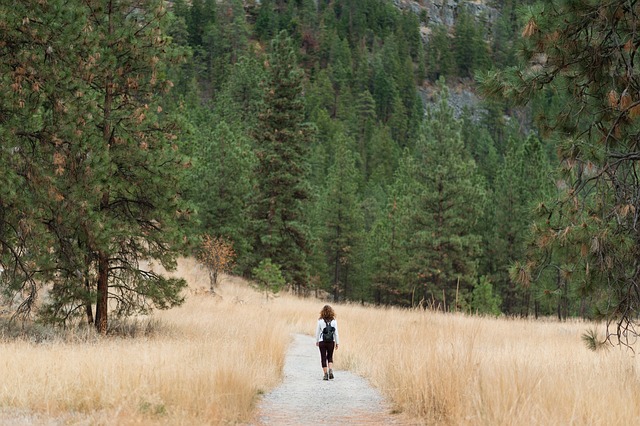
Cover photo: yinet_87 on Pixabay.
Old Ranger Days is research-based: we work from verified specifications and official sources, and never claim hands-on testing unless it happened. Some links may be affiliate links. Editorial policy · Affiliate disclosure