 Old Ranger Days
Packs & Camp Gear
Emergency Blanket vs Bivy for Hiking: Which to Carry
An emergency bivy beats a flat blanket for most hikers: it closes around you and blocks wind. Carry a blanket as a light backup or to cover someone else.
The SOL Emergency Bivvy with Rescue Whistle is the emergency shelter most day hikers should carry. It is a sealed, waterproof and windproof sack that weighs 3.8 oz. A bivy closes around you, while a flat blanket usually has to be held in place.
A flat emergency blanket still earns a place in your first aid kit. It is lighter, it wraps an injured person easily, and it can become a tarp or ground sheet. If you expect a long wait, a breathable bivy traps less of your own moisture.
We did not test these products. The picks come from SOL's own pages, reviews by The Next Summit, Hike or Die and SEALgrinderPT, and a medical review. Owner threads on Backpacking Light and SectionHiker filled in the rest.
The other picks:
- SOL Emergency Blanket: a 2.9 oz flat sheet for a first aid kit, a second person or a quick windbreak.
- SOL Escape Bivvy with Hood: a breathable bivy for long waits and repeated use.
Quick picks
| Pick | Best for | Why |
|---|---|---|
| SOL Emergency Bivvy with Rescue Whistle | Most day hikers, as the one emergency shelter | Sealed seams, 3.8 oz, 84 x 36 inches |
| SOL Emergency Blanket | First aid kits and covering someone else | 2.9 oz each, 56 x 84 inches, sold as a 4-pack |
| SOL Escape Bivvy with Hood | Long waits and repeat use | Breathable fabric that SOL says cuts condensation |
Links go to Amazon. They are affiliate links: we may earn a commission at no extra cost to you.
Video by Ridgeline And Beyond. We are not connected to this channel.
The picks in detail
SOL Emergency Bivvy with Rescue Whistle
This is for day hikers who want one small shelter that closes around them.
SOL lists it at 84 x 36 inches and 3.8 oz, "smaller than a soda can". The material is waterproof and windproof with sealed seams, and SOL says it reflects 90% of body heat. It comes with a survival whistle and an attached tinder cord drawstring.
Hike or Die's two testers used these bags for four days as their only sleeping gear, on cut grass over dirt. Tom Griffin wrote that they "really, really impressed me". When one bag tore, the tear went no further and duct tape fixed it.
On SectionHiker, one reader says the SOL bivy lasts three to four uses with care. The same reader finds it quieter than cheap silver sheets.
The main drawback is moisture. SectionHiker's Greg Pehrson owns one and calls it "non-breathable", working as a vapor barrier. SectionHiker says SOL's mylar bivvies trap moisture inside.
SOL Emergency Blanket
This is for a first aid kit or for wrapping around an injured partner.
SOL lists it at 56 x 84 inches and 2.9 oz. It is vacuum-metalized polyethylene, which SOL says "will not shred like mylar when punctured". It is waterproof, windproof, high-visibility orange, and quiet in wind.
The Next Summit named it its best budget pick and called it much better than the cheapest blankets, which "quickly fall apart". Its author still would not plan on using one more than once or twice.
A flat sheet does jobs a sack cannot. SOL lists ground tarp, rain poncho, signal flag and arm sling among the uses of its blankets.
The drawback is coverage. The Next Summit says blankets usually need holding around you, which makes sleep "difficult to impossible". The Amazon listing is a 4-pack, so you can stash one in each pack.
SOL Escape Bivvy with Hood
This is for hikers who might wait out a long night and want less condensation.
SOL lists the Regular at 84 x 31 inches and 8.5 oz, and an XL at 91 x 39 inches and 9.5 oz. The fabric is a spunbonded olefin with a metalized coating. SOL calls it breathable and "highly water-resistant". It says the bivvy reflects 70% of body heat, and it gives a 2-year warranty.
The Next Summit named it its best lightweight bivy, much easier to keep wind and rain out than a blanket. SEALgrinderPT slept in one on a bikepacking race at about 31 °F. With a liner bag and a floorless tent overhead, he "did not shake at all".
The drawback is pressure from below. A Backpacking Light member tested a fabric sample from an older Escape. Its water resistance came in just under the rain-proof standard he cited. By his numbers, it keeps out most falling rain but not water pressed in by sitting or kneeling on it.
SOL's XL gives more room for you and your sleeping bag, especially for taller hikers.
How to choose
Emergency blanket vs bivy: which is warmer?
The bivy, for one person. It covers you on all sides and keeps the wind off. The National Weather Service says rising wind draws heat from the body. At 0 °F and 15 mph, the wind chill is -19 °F.
A Backpacking Light member slept under a flat survival blanket in the 40s °F, wearing an insulated jacket. He was cold below the knees and concluded "the bivy will be better". A SectionHiker reader adds that a bivy is easier to stuff with dry leaves for insulation.
For most hikers, the SOL Emergency Bivvy is the warmer choice.
Do emergency blankets and bivies really work?
Yes, as emergency gear. A 2022 review in an environmental health journal says rescue blankets cut heat loss by convection, conduction, evaporation and radiation. The Next Summit cites a 2020 trial on ambulance transfers. It found no significant difference in cold distress between rescue blankets and conventional blankets.
The ground is the weak spot. SectionHiker's tester felt the cold ground through a SOL Escape Pro bivvy at 66 °F without a pad. Sit on a foam pad or dry leaves. Our sleeping pad R-value guide explains how much insulation the ground needs.
Sealed or breathable: what about condensation?
A sealed emergency shelter traps your moisture. One SectionHiker reader got caught in a heavy rain storm on the Appalachian Trail. Condensation soaked him from the knees down, "but it keep me warm and mostly dry".
For a long, cold wait, the breathable SOL Escape Bivvy is the better pick. One owner still warns that liquid sweat stays inside with you.
Do you need one if you carry a tent?
The National Park Service lists emergency shelter among the Ten Essentials: a tent, tarp, bivy sack or emergency space blanket. Several SectionHiker readers carry one on day hikes but leave it home when they backpack with a tent and sleeping bag.
Short trails count too. A SectionHiker reader describes a hiker who fell off a trail during a 3-mile hike on Mt. Rainier and waited more than four hours for rangers. His main complaint was the cold.
SOL also sells a Heavy Duty Emergency Blanket at 8 oz that works as a reusable tarp.
When is a blanket or bivy not enough?
The CDC says hypothermia can happen above 40 °F if rain or sweat chills you. Its warning signs include shivering, confusion, fumbling hands, slurred speech and drowsiness. The CDC calls hypothermia a medical emergency.
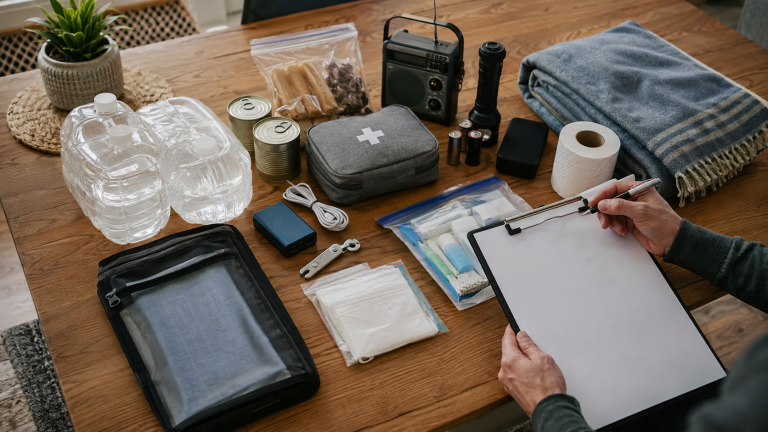
Our PLB vs satellite communicator guide covers calling for help without cell service. For the medical side, read hypothermia warning signs and pack a cold-weather first aid kit. For a home or car kit, see the 72-hour emergency kit checklist. The rest of your kit is in the outdoor gear guide.
Frequently asked questions
Which is warmer, an emergency blanket or a bivy?
A bivy, for one person. A Backpacking Light forum member slept under a flat survival blanket in the 40s °F. He said it conforms poorly to your body and the bivy will be better.
Is an emergency bivy breathable?
Only some are. SectionHiker says SOL's Emergency Bivvy is non-breathable and works as a vapor barrier. SOL sells the Escape Bivvy as breathable and says it cuts condensation. An owner of the Escape notes it lets vapor out, but liquid sweat stays with you.
Should an emergency blanket go in a first aid kit?
Yes. A 2022 review of rescue blankets in alpine emergencies calls them indispensable, low-weight equipment in emergency kits. A SectionHiker reader describes a hiker who fell on Mt. Rainier and waited over four hours for rangers. Space blankets from the fallen hiker's own first aid kit helped him.
Do I need a sleeping pad with an emergency bivy?
You need something between you and the ground. SectionHiker's tester felt the cold ground through a SOL Escape Pro bivvy at 66 °F without a pad. A pad or a layer of dry leaves cuts that heat loss.
Can an emergency bivy replace a sleeping bag?
Not for a planned night. The Next Summit says emergency blankets are built for survival, not comfort. SOL says the Escape Bivvy can serve as a light sleeping bag in warmer months. Used over a sleeping bag, SOL says it can add 10 to 15 degrees to the bag's rating.
Sources
- SOL: Emergency Bivvy with Rescue Whistle
- SOL: Escape Bivvy with Hood
- SOL: Emergency Blanket
- SOL: Heavy Duty Emergency Blanket
- SOL: Survival Bivvies
- SOL: Emergency Blankets
- The Next Summit: Do Emergency Blankets Really Work for Wilderness Survival?
- SectionHiker: SOL Escape Pro Bivvy Review
- Hike or Die: Gear Review, SOL Emergency Bivvy
- SEALgrinderPT: SOL Escape Bivvy Review
- SectionHiker: Reader Poll, Do You Carry an Emergency Blanket When Hiking?
- Backpacking Light Forum: Space Blanket for Emergency Shelter
- Backpacking Light Forum: The SOL Escape Bivvy
- International Journal of Environmental Research and Public Health: Rescue Blankets as Multifunctional Rescue Equipment
- National Park Service: 10 Essentials
- CDC: Preventing Hypothermia
- National Weather Service: Understanding Wind Chill
Cover photo: Pexels on Pixabay.
Old Ranger Days is research-based: we work from verified specifications and official sources, and never claim hands-on testing unless it happened. Some links may be affiliate links. Editorial policy · Affiliate disclosure