Old Ranger Days
Preparedness
72-Hour Emergency Kit Checklist: What You Actually Need
In this guide
- Start with a plan, not a shopping cart
- Water: the first priority
- Food that the household will actually eat
- Light, power and communication
- First aid, medication and health needs
- Shelter, warmth and clothing
- Hygiene and sanitation
- Documents, cash and practical tools
- Adapt the kit to real people
- How to build the kit without overspending
- Store, label and review
- The printable mental checklist
- Frequently asked questions
- Continue the preparedness cluster
Last reviewed: August 2026.
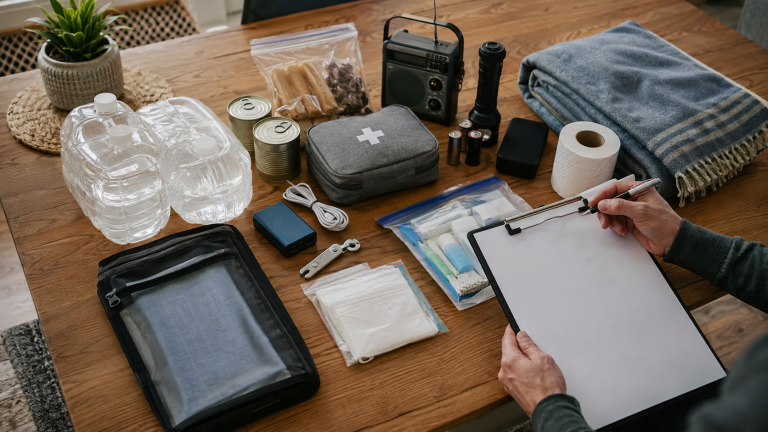
A 72-hour emergency kit is a starting layer of resilience: enough essential supplies to help a household manage the first three days of a disruption while information, utilities and services are uncertain. It should not be a random collection of survival gadgets. A useful kit reflects the people, climate, home, transport and likely hazards involved.
Ready.gov recommends supplies that allow a household to manage independently for several days after a disaster. This checklist turns that broad goal into a practical system that can be built gradually, stored sensibly and reviewed twice a year.
Start with a plan, not a shopping cart
Identify the disruptions most relevant to the location: severe weather, bushfire, flood, power loss, transport interruption, evacuation or a temporary water problem. Decide whether the kit is mainly for staying home, leaving quickly or supporting both situations.
Write down household members, pets, medication, mobility needs, allergies, communication requirements and any equipment that depends on electricity. The plan determines the supplies; the supplies do not create the plan.
Water: the first priority
A common preparedness baseline is one gallon—about 3.8 litres—per person per day for drinking and sanitation. For three days, that means roughly three gallons per person, with additional water for pets, medical needs, hot weather or physically demanding conditions.
- Use sealed food-grade containers or commercially bottled water.
- Store water away from fuel, chemicals, direct sunlight and extreme heat.
- Include lightweight bottles for evacuation rather than expecting one heavy container to be portable.
- Know how the local authority communicates boil-water or contamination notices.
- Add a treatment method only after understanding what it removes and what it does not.
Natural water and household storage are different problems. For remote travel, use the detailed guide to finding and treating wilderness water.
Food that the household will actually eat
Choose shelf-stable food that requires little water, fuel or preparation. Rotate normal foods rather than buying unfamiliar products that may never be used. Consider calories, protein, dietary restrictions and the needs of children or older adults.
- Ready-to-eat canned food with a manual can opener.
- Nut or seed butter, crackers, cereal, protein bars and dried fruit.
- Shelf-stable milk or suitable alternatives.
- Food and a bowl for each pet.
- Infant formula or specialised food where required.
- A small amount of comfort food that stores safely.
Do not depend on refrigeration during a power outage. Keep food-safety guidance available and discard food when official advice says it is unsafe.
Light, power and communication
- At least one reliable flashlight or headlamp per adult.
- Spare batteries stored in their original packaging.
- A battery or hand-crank radio capable of receiving official broadcasts.
- Charged power banks and the correct cables for essential devices.
- A written contact list and an out-of-area contact.
- A whistle and other simple signalling equipment.
- Offline copies of local emergency numbers, meeting points and evacuation routes.
Test every light, radio and power bank before storing it. Devices that have never been operated are not dependable emergency equipment.
First aid, medication and health needs
Use a first-aid kit matched to the household and obtain recognised training. Add personal medication, copies of prescriptions, allergy information, spare glasses and essential medical supplies. Medication storage and emergency refills vary, so discuss a safe plan with a pharmacist or healthcare professional.
Include masks or respirators appropriate to local hazards, hand sanitiser, soap, tissues and menstrual products. A kit cannot cover every medical emergency; call emergency services for serious illness or injury.
Shelter, warmth and clothing
- A warm blanket or compact sleeping bag for each person.
- Weather-appropriate spare clothing and sturdy closed footwear.
- Rain protection and work gloves.
- Sun protection for hot climates.
- A compact emergency shelter if evacuation may involve time outdoors.
- Cooling supplies where heat is a realistic risk.
Never use a fuel-burning stove, charcoal grill, lantern or unapproved heater inside a home, tent, vehicle or enclosed shelter. Carbon monoxide can accumulate without warning.
Hygiene and sanitation
- Toilet paper, rubbish bags and ties.
- Soap, hand sanitiser and disinfecting wipes.
- Toothbrushes and basic personal-care items.
- Nappies, incontinence products or other individual supplies.
- Pet-waste bags and cleaning materials.
- Waterproof storage for clean and used items.
Documents, cash and practical tools
- Copies of identification, insurance, prescriptions and key household information in a waterproof pouch.
- A small amount of cash in useful denominations.
- House and vehicle keys.
- A manual can opener and simple multipurpose tool where lawful.
- Phone chargers, a paper map and a pencil.
- Duct tape, cord and basic repair items.
- A fire extinguisher suitable for the home and knowledge of how to use it.
Protect sensitive documents without placing unnecessary personal information in an easily stolen bag. Encrypted digital copies can provide another layer, but they should not be the only copy.
Adapt the kit to real people
Children
Add age-appropriate food, comfort items, clothing, identification and a written reunification plan. Teach the plan calmly and practise without creating fear.
Older adults and disability needs
Include mobility aids, hearing-aid batteries, communication cards, backup power arrangements and clear medication information. Plan who can assist during evacuation.
Pets
Pack water, food, medication, carriers, leads, sanitation items, identification and vaccination records. Confirm which evacuation centres or accommodation options accept animals.
Vehicle and work kits
A small vehicle kit can include water, light, first aid, weather protection, charging, a high-visibility item and location-specific tools. Avoid storing medication, batteries or food in conditions that exceed their safe temperature range.
How to build the kit without overspending
- Week 1: Gather items already owned and create the written plan.
- Week 2: Add water containers and three days of familiar food.
- Week 3: Complete lighting, radio, charging and communication.
- Week 4: Add first aid, medication, hygiene, clothing and household-specific supplies.
Ready.gov’s low- and no-cost preparedness guidance recommends building supplies over time and starting with items already at home. Preparedness should not create financial hardship.
Store, label and review
Keep the main kit accessible, dry and known to every responsible household member. Heavy water can stay in a suitable storage area while a lighter evacuation bag remains ready to move. Label containers by purpose, not with dramatic language that makes routine rotation less likely.
Review the system every six months and after moving, changing medication or adding a household member. Replace expired food and batteries, recharge power banks, update documents, test equipment and adjust clothing for the coming season.
The printable mental checklist
- Plan and contacts
- Water
- Food and can opener
- Light and spare batteries
- Radio and charging
- First aid and medication
- Clothing and shelter
- Hygiene and sanitation
- Documents, cash and keys
- Children, disability and pet needs
Frequently asked questions
Is exactly 72 hours enough?
Three days is a useful minimum planning layer, not a guarantee that services will return. Local authorities may recommend more for isolated areas or specific hazards. Build beyond three days gradually when space, budget and local guidance support it.
Should everything be kept in one backpack?
Usually not. Water for several people is heavy. Use a modular system: accessible home supplies, one portable evacuation bag per capable person and smaller kits for vehicles or work.
Do I need expensive survival food?
No. Familiar shelf-stable food is often cheaper, easier to rotate and more likely to be eaten. Specialised products can be useful for particular space or storage requirements, but they are not the foundation.
Continue the preparedness cluster
Use the central Emergency Preparedness Guide to connect the kit with communication, evacuation and recovery. For scarcity planning, read How to Survive a Supply Chain Crisis.
Official references: Ready.gov Build a Kit, Ready.gov Emergency Food, and Low- and No-Cost Preparedness.
Old Ranger Days is research-based: we work from verified specifications and official sources, and never claim hands-on testing unless it happened. Some links may be affiliate links. Editorial policy · Affiliate disclosure