 Old Ranger Days
In this guide
2026 winter camping safety update
Winter camping demands conservative planning: daylight is short, travel is slower and a minor equipment failure can become serious. Check the detailed forecast, avalanche information where relevant, local fire restrictions and park rules; leave a route and return time with a trusted person; and set a firm turnaround time.
- Never burn fuel inside a tent: do not operate a camping stove, lantern, charcoal grill or fuel-burning heater in a tent, vehicle or enclosed shelter. Carbon monoxide is odorless and can kill even when a door or vent is open. Follow current CDC carbon-monoxide guidance.
- Keep the shelter ventilated: open the tent vents to reduce condensation, clear drifting snow from vents and never seal the shelter completely.
- Insulate from the ground: use a winter-appropriate pad system and a sleeping bag whose comfort rating includes a margin below the expected overnight low.
- Protect water and fuel: carry more fuel than a summer trip, prevent filters and bottles from freezing, and keep eating and drinking regularly.
- Plan for retreat: test critical gear in cold conditions before a remote trip and know the signs of hypothermia and frostbite. The National Park Service winter safety guidance is a useful pre-trip reference.
Do not rely on a campfire to deter wildlife. Store food and scented items according to local rules. For the rest of the system, see our sleeping bag guide and hiking safety checklist.
Starks have finally turned to be right. Winter has come. So has snow and cold, which makes us think twice before going camping. Although everywhere is blanketed in white as long as eyes could see offering a postcard-like view that is too tempting to grab the backpack, that cold restrains us from stepping outside. Staying at home sounds more logical than seeking adventure. Naturally. What if we change your mind, putting some convincing arguments forward as to why it isn’t that much frightening activity to do and how fulfilling it might be for you? Still insist on staying indoors? While winter camping is at your service?
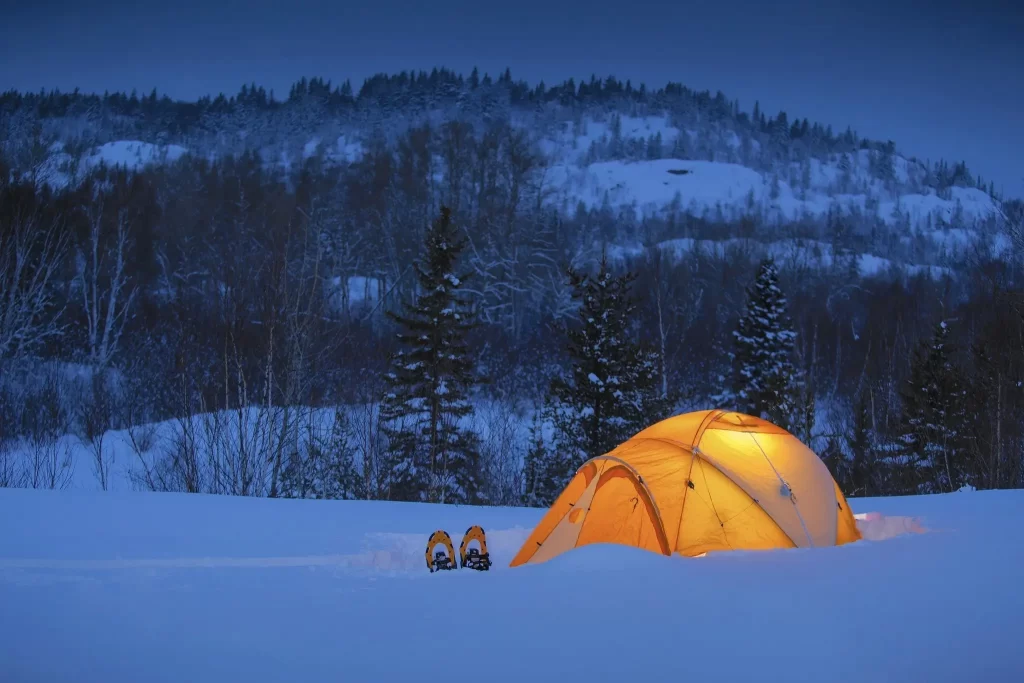
First of all, like you do, everyone thinks that going camping in winter would be a mistake. This is good because of the effect. Considerably more seclusion than other seasons. Besides, hibernation of bears and this challenging weather forcing reptiles to brumate ( a period of dormancy only in reptiles, the state of shutting down their bodies to conserve energy migrating to underground ) lessen the risk of dangerous confrontations too. No need to mention insects or flying creatures that are off to warmer regions or retreat under the soil, inside the wood of logs or anywhere else away from the ground in order to survive. So, we seem to be only visible occupiers of nature.
Wildlife can remain active in winter. A campfire is not a reliable wildlife deterrent; follow local food-storage and wildlife guidance instead. Keep food and scented items secured as required by the land manager and check current wildlife notices before traveling. What is unusual or extraordinary in nature doesn’t generally attract predators. They don’t have the courage of innocence like small curious animals have.
Fire in winter camping
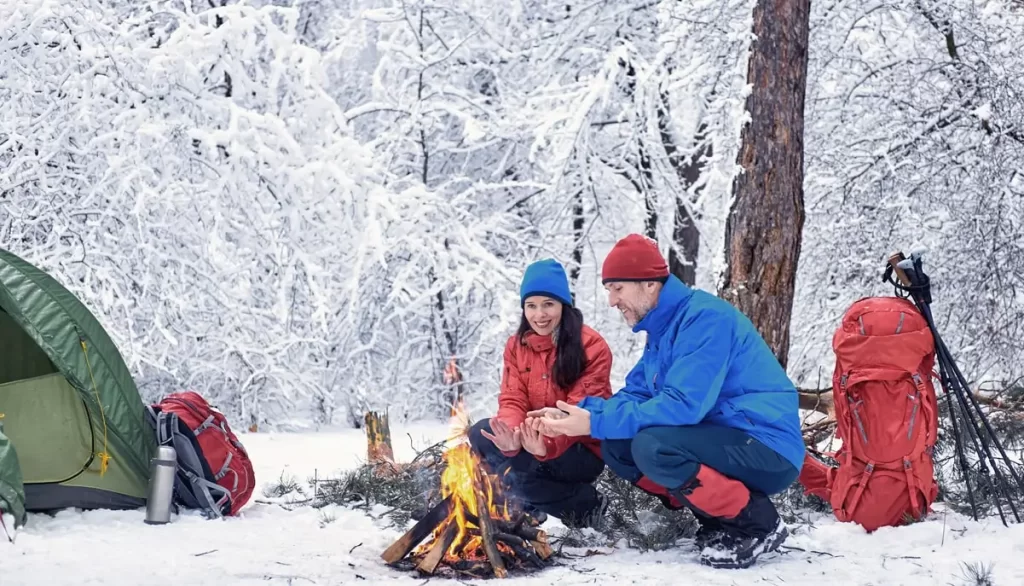
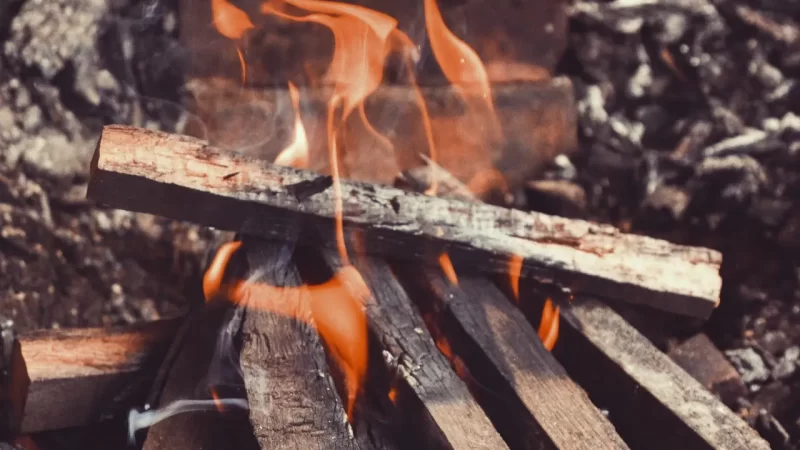
Apart from security, fire also provides heat and cozy ambience that improves our mood thanks to the relief it radiates. Making a fire pit with stones you can find in the vicinity:
- Use dead, dry wood for fire otherwise wet wood you gather produces lots of smoke and it will be harder to keep fire going. Wetness of wood affects the time span it flames up,
- Be sure of the fire pit is approximately twenty feet away from the tent,
- Never leave a campfire burning overnight or unattended. Observe current fire restrictions and fully extinguish it before sleeping,
- To extinguish a campfire, drown it with water, stir the embers, add more water and ensure everything is cold to the touch. Snow alone is not a reliable substitute.
Against Cold
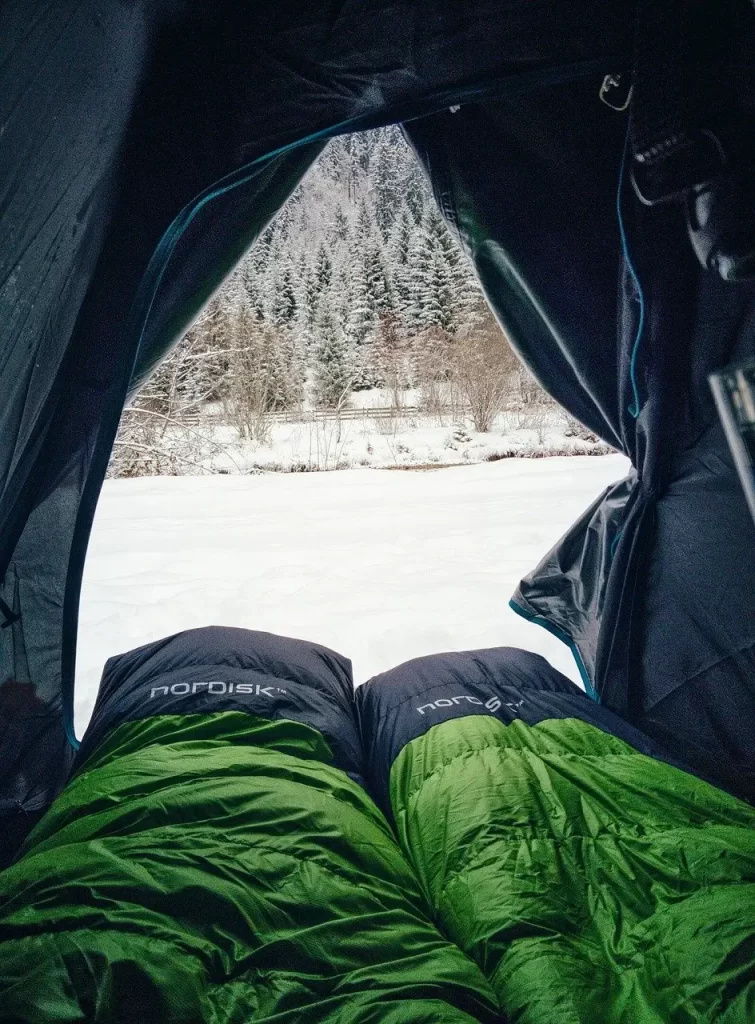
Choosing a safe campsite and an appropriate shelter comes before pitching on snow. For a buying decision based on wind, snow load, ventilation and weight, see our 3-season vs 4-season tent comparison for winter camping.
Winter camping gear: what to choose before you buy
Start with the conditions at your destination, not a generic gear list. Forecast lows, expected snow depth, wind exposure, campsite rules and your experience determine what you need. For a practical U.S. winter-backpacking checklist, consult the National Park Service winter backpacking gear checklist. Check the specific park’s current conditions and permit rules before leaving.
- Shelter: Compare a 3-season vs 4-season tent for your anticipated wind and snow loading. A four-season label alone does not make a campsite safe.
- Anchors: Ordinary narrow stakes may not hold in soft snow. Read our snow stakes vs regular tent stakes guide and learn how to test secure anchors before relying on them.
- Ground insulation: Choose an appropriately insulated pad system before spending more on a warmer sleeping bag. Compare foam vs inflatable sleeping pads for winter camping and review our sleeping pad R-value guide.
- Sleeping bag: Consider the published comfort rating, your pad, moisture and your own cold tolerance. See the 20°F vs 30°F sleeping bag comparison; neither rating guarantees comfort in every winter condition.
- Cooking: Stove fuel performance changes with conditions. Compare canister vs liquid-fuel stoves in cold weather. Never operate a fuel-burning stove or heater inside a tent or enclosed sleeping area.
Affiliate disclosure: Some of our linked gear guides may contain affiliate links. As an Amazon Associate, Old Ranger Days earns from qualifying purchases. Product comparisons here are based on documented specifications and safety guidance, not claimed hands-on testing.
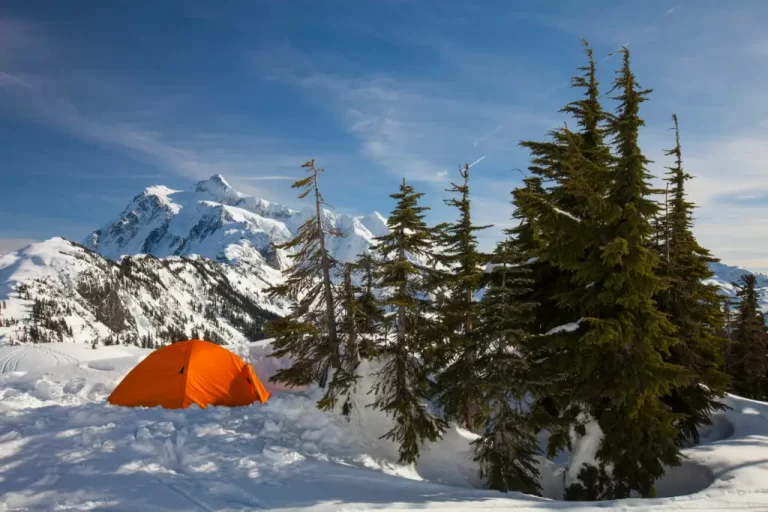
- Not on vegetation or underneath trees, detect a flat spot to pack down the snow so that we have hard ground to sleep on,
- If it is too windy, you can build walls around your tent creating snow crates.
Second precaution is insulation and prevention of potential heat loss.
- Ground insulation matters as much as sleeping-bag warmth. Choose a sleeping pad or combined pad system with an appropriate ASTM F3340 R-value for expected conditions; higher R-values indicate greater resistance to heat loss. A closed-cell foam pad can provide backup insulation alongside an inflatable pad, but two pads are not mandatory for every trip. See our sleeping pad R-value guide for buying considerations,
- We need a decent sleeping bag to ensure warmth during cold night. They don’t actually provide warmth. Trapping a pocket of air, they just create a boundary between your body and the environment. This air pocket is warmed by your body heat and your body temperature doesn’t change. It will be good to do some mild exercise or stretching before getting inside of it. Lastly, its comfort and lower limit rating should be lower than the coldest temperature you expect to encounter during the night,
- Nutrition is the key for prevention of potential heat loss. Drinking water regularly (it does not have to be heated), calorie dense foods and constant consumption of these mean energy, energy causes movement, movement stabilizes body heat.
Third precaution is ventilation.
- Safety correction: Never use a fuel-burning camping stove, lantern, charcoal grill or heater inside a tent or other enclosed sleeping space. Ventilation does not make this safe because carbon monoxide can accumulate without warning. Use stoves outdoors, well away from tent openings, and use only equipment specifically approved for the location and conditions.
Additional
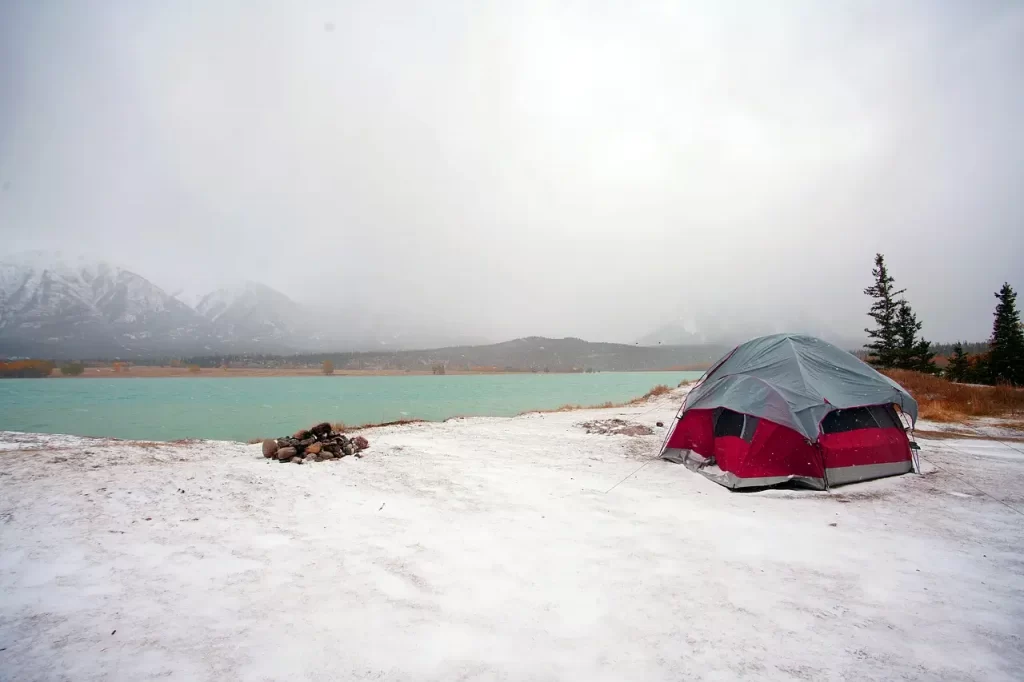
Dealing with snow is a bit attention demanding business. Be aware of your surrounding, especially of the spots that might be subject to avalanche. During snowfall, monitor snow loading and follow the tent manufacturer’s guidance for safely clearing accumulation. Shaking a tent on a fixed schedule does not make a shelter suitable for heavy snow or wind.
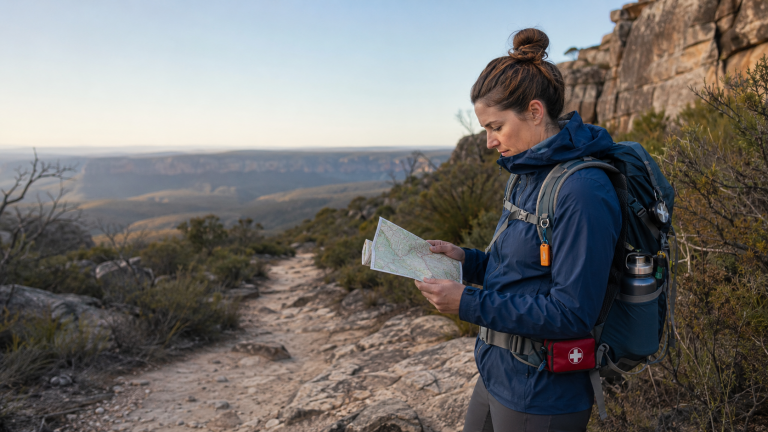
And, your backpack must be prepared in the light of ‘the Ten Essentials‘, with equipment suited to the actual snow and terrain. Review our winter camping shovel vs avalanche shovel buying guide before choosing a digging tool; avalanche terrain also requires appropriate training and a beacon–probe–shovel rescue system.
Old Ranger Days is research-based: we work from verified specifications and official sources, and never claim hands-on testing unless it happened. Some links may be affiliate links. Editorial policy · Affiliate disclosure