 Old Ranger Days
In this guide
- The 7 beginner bushcraft skills
- Before you practice: choose a legal training area
- 1. Navigation drills
- 2. Knots and line management
- 3. Pitch a tarp without harming trees
- 4. Practice water-treatment equipment
- 5. Learn flame-free cooking and legal fire readiness
- 6. Build safe tool habits
- 7. Keep an observation and weather log
- Add Leave No Trace to every drill
- A four-week beginner practice plan
- Frequently asked questions
- Bottom line
- Further learning
You do not need remote wilderness, a large property or a pile of cutting tools to learn useful bushcraft. Many of the best bushcraft skills for beginners can be practiced in a backyard, local park, living room or nearby trail without cutting live trees, lighting illegal fires or disturbing wildlife.
The goal is repeatable competence: navigate a short route, tie a secure knot, pitch a tarp, operate water-treatment equipment and make sound decisions under changing conditions. Always follow property rules, fire restrictions and Leave No Trace practices. Get permission before using private land.
The 7 beginner bushcraft skills
- Map, compass and observation-based navigation
- Useful knots and line management
- Tarp pitching without damaging trees
- Water-treatment equipment practice
- Flame-free cooking and legal fire readiness
- Safe tool handling
- Weather logging and Leave No Trace decision-making
Before you practice: choose a legal training area
A public park is not automatically a bushcraft practice area. Rules may prohibit collecting wood, attaching objects to trees, building shelters, digging, cutting vegetation or using any flame. Check the managing agency’s website and posted signs. At home, confirm local fire rules and keep activities within your property boundary.
Use your own materials: a tarp, cord, dowels, store-bought practice wood, water container and training tools. Do not strip bark, cut live branches, dismantle habitat, build unauthorized structures or leave cord tied around a tree.
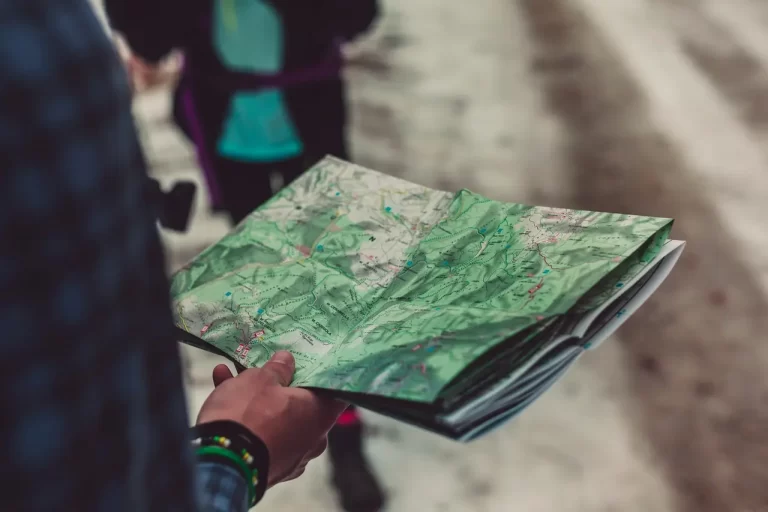
1. Navigation drills
Navigation is one of the most useful bushcraft skills for beginners because it improves every trip without consuming natural resources. Begin in a familiar area where a mistake has little consequence.
- Orient a paper map to visible landmarks.
- Identify north with a baseplate compass and account for local magnetic declination when working with bearings.
- Estimate distance by time and counted paces on level ground.
- Choose a handrail such as a trail, fence or stream and an unmistakable catching feature beyond your target.
- Stop at each junction, point to your location and predict the next terrain feature before moving.
Try a short triangle course in an open field using three bearings and measured distances. A phone GPS can verify the result after the drill, but do not let it replace the thinking process. Practice with the map folded, in light rain and near sunset while staying in a safe, legal area.
2. Knots and line management
Learn a small set of knots by function instead of memorizing dozens:
- Bowline: creates a fixed loop.
- Two half hitches: secures a line to an object.
- Taut-line hitch: makes an adjustable guyline.
- Trucker’s hitch: adds controlled tension to a line.
- Sheet bend: joins two ropes or cords, especially of different sizes.
Use brightly colored practice cord at home. Tie each knot slowly, dress it neatly, load it gently and inspect how it releases. Then repeat with gloves and limited light. Knots used for camping are not automatically suitable for climbing, rescue or life support; those applications require rated equipment and qualified instruction.
Our five outdoor knots guide provides a useful starting sequence.
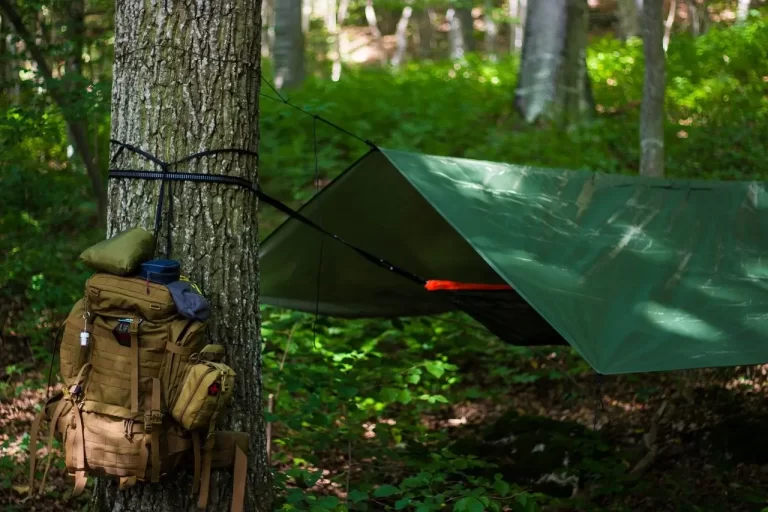
3. Pitch a tarp without harming trees
A tarp teaches site selection, tension, wind management and water runoff. Practice first between freestanding supports, fence posts designed for use or weighted anchors. If local rules allow attaching lines to sturdy trees, use wide tree-friendly straps and remove everything afterward.
Build three simple configurations:
- A-frame: balanced rain protection with a ridgeline.
- Lean-to: open visibility and wind protection from one direction.
- Low storm pitch: reduced profile with less interior room.
Face the lower or closed side toward expected wind, keep runoff away from the sleeping area and avoid natural drainage channels. Practice packing the tarp and guylines so they deploy without tangles. Never leave a practice shelter in a park after you finish.
4. Practice water-treatment equipment
The wrong time to learn a filter is when you are thirsty miles from the trailhead. At home, use clean tap water to learn assembly, flow direction, backflushing, leak checks and storage. Read the manufacturer’s instructions for freezing, chemicals and service life.
- Time how long it takes to treat one bottle.
- Mark “dirty” and “clean” containers so they never get confused.
- Practice without setting the clean-side cap on contaminated ground.
- Learn the required chemical-treatment contact time for the product you carry.
- Pack a backup method appropriate to the trip.
A filter and a purifier are not always the same. Compare methods in our hiking water filter vs. purifier guide. Do not practice by drinking from an urban pond or local stream merely to “test” equipment; water hazards vary and treatment devices have limits.
5. Learn flame-free cooking and legal fire readiness
Firecraft is often presented as central to bushcraft, but a beginner can build excellent trip skills without lighting a fire. Practice assembling no-cook meals, using insulated clothing and organizing camp before dark. Learn to check current restrictions and identify which devices, if any, are allowed.
If fire practice is legal on your property or at a designated facility, use an established fire ring, adult supervision, water and a shovel. Start small, attend it continuously and extinguish it until the remains are cold. Never use accelerants. Do not conduct friction-fire drills during dry or windy conditions, and do not assume a spark-producing tool is exempt from a ban.
Read our campfire guide only for places and times where fires are legal. During restrictions, use flame-free campfire alternatives.
6. Build safe tool habits
A knife or saw does not create skill; controlled technique does. Beginners should start with simple tasks on purchased practice material in a stable work area. Wear eye protection when appropriate and keep a first-aid kit nearby.
- Inspect the handle, lock, sheath and cutting edge before use.
- Create a clear safety zone so no person is within the tool’s path.
- Cut away from the body and keep the supporting hand out of the projected path.
- Use a stable surface; never hold material against a thigh.
- Make controlled cuts instead of applying maximum force.
- Sheath or close the tool before moving.
- Stop when tired, cold, distracted or working in poor light.
Do not practice felling, live-tree cutting, trapping or improvised spear making. These activities can be illegal, destructive and far higher consequence than their online demonstrations suggest. Seek in-person instruction for advanced axe, saw and carving work.
7. Keep an observation and weather log
Bushcraft is partly the ability to notice change. Choose a nearby route and record temperature, cloud cover, wind direction, recent rain, daylight, trail surface and visible landmarks. Compare your observation with the forecast and note what you missed.
Practice identifying weather patterns—not edible plants. Plant and mushroom identification errors can be serious, and images or apps alone are not enough for consumption decisions. Learn from qualified local experts and use multiple authoritative references before considering any foraging.
Add Leave No Trace to every drill
A skill is incomplete if practicing it damages the place. Apply the seven Leave No Trace principles: plan ahead, use durable surfaces, dispose of waste properly, leave what you find, minimize campfire impacts, respect wildlife and be considerate of others.
- Use removable anchors and your own practice material.
- Pack out cord scraps, food and all training aids.
- Keep noise low and yield space to other visitors.
- Observe wildlife from a distance and never bait animals.
- Dismantle practice setups and restore the area before leaving.
A four-week beginner practice plan
- Week 1: orient a map, measure pace count and tie three knots.
- Week 2: pitch two tarp configurations and organize guylines.
- Week 3: operate and clean water-treatment gear; prepare a no-cook meal.
- Week 4: combine the skills on a short legal day outing, then write an after-action review.
Measure improvement by fewer errors, faster setup without rushing and better decisions—not by adding risk. Repeat the weakest task before buying more equipment.
Frequently asked questions
Can I practice bushcraft in a public park?
Only activities allowed by that park’s rules. Navigation and knot practice may be fine, while fires, cutting, collecting wood, digging or attaching shelters to trees may be prohibited. Check first.
What bushcraft skill should a beginner learn first?
Navigation and trip planning offer the broadest safety benefit with very little environmental impact. Add knots, shelter and water-treatment practice next.
Do beginners need a large survival knife?
No. Many foundational skills require no blade. If you use a tool, choose one you can control, learn safe handling and practice on legal materials in a low-consequence setting.
Is starting a fire necessary bushcraft practice?
No. Fire restrictions, weather and land rules may prohibit it. Flame-free cooking, insulation, shelter, navigation and emergency planning are often more useful and can be practiced year-round.
Bottom line
The best bushcraft skills for beginners are the ones you can practice repeatedly, legally and without leaving damage. Build navigation, knots, shelter, water, tool-control and observation skills close to home. Competence grows from deliberate repetition and honest review, not from creating unnecessary survival scenarios.
Further learning
- Leave No Trace: The 7 Principles
- Leave No Trace Recreational Training
- Old Ranger Days: Bushcraft Skills to Survive
Old Ranger Days is research-based: we work from verified specifications and official sources, and never claim hands-on testing unless it happened. Some links may be affiliate links. Editorial policy · Affiliate disclosure