 Old Ranger Days
Recalls & Alerts
OCOOPA Hand Warmer Recall 2026: Models, Refunds and Battery-Free Options
In this guide
- What Was Recalled?
- Why the Recall Is Serious
- How to Check Your OCOOPA Hand Warmer
- Do Not Put the Recalled Warmer in the Trash
- Why This Matters Before Fall Hiking Season
- Four Battery-Free Amazon US Alternatives
- How to Choose an Alternative
- Hand-Warmer Limitations on the Trail
- Frequently Asked Questions
- Official Sources
Quick answer: Stop using an OCOOPA rechargeable hand warmer if its model is UT3053, UT3056, ZLS-118, ZLS-118S, ZLS-118D, H01 or H01(PD). The U.S. Consumer Product Safety Commission announced a recall on July 30, 2026, because the lithium-ion batteries can overheat and ignite. Check the model and three-digit batch number printed on the underside against the official recall, request the specified refund, and do not put the device in household trash or curbside recycling.
This OCOOPA hand warmer recall guide is for U.S. hikers, campers, hunters, parents and emergency-kit owners who may have bought a two-pack through Amazon, OCOOPA or Walmart. It explains what CPSC reported, how to identify the affected products, what to do next and how to choose a battery-free alternative for fall outings.
What Was Recalled?
CPSC and Shenzhen Street Cat Technology Co., Ltd., doing business as OCOOPA Direct, recalled about 1.5 million dual-sided rechargeable lithium-ion hand warmers. The affected products were sold in pairs in different colors and designs, could be joined magnetically, had adjustable heat settings, LED indicators, a USB-C charging port and a silicone lanyard.
The seven model names in the recall are UT3053, UT3056, ZLS-118, ZLS-118S, ZLS-118D, H01 and H01(PD). UT3053 was also marketed as UT3 Lite and UT3056 as UT4 Young. CPSC says the model number and three-digit batch number are printed on the underside. A familiar color or product photo is not enough to identify an affected unit.
The recalled hand warmers were sold online through Amazon.com, Ocoopa.com, Ocoopa.net and Walmart.com from September 2018 through May 2026. A marketplace listing may have changed or disappeared, so identify the warmer itself rather than relying only on order-history photos.
Why the Recall Is Serious
CPSC says the lithium-ion battery can overheat and ignite, creating fire and burn hazards. At the time of the July 30 announcement, OCOOPA Direct had received 1,480 reports of overheating, including 15 fires and 350 burn injuries. The agency also reported the February 2026 death of an 83-year-old consumer in San José, California.
Those figures come from the federal recall notice, not from product reviews or estimates. They are also why a recalled warmer should not be used “one more time,” charged outdoors as a workaround or left in a vehicle for a future decision.
How to Check Your OCOOPA Hand Warmer
1. Turn it off and let it cool
If the warmer is operating normally, switch it off and place it away from combustible material while it cools. Do not charge it again. If it is unusually hot, swollen, leaking, smoking or making noise, move away and follow local fire-department guidance; do not handle a visibly failing lithium-ion battery unnecessarily.
2. Read the underside
Find the model number and three-digit batch number printed on the warmer’s underside. Check both pieces of a two-pack because the recall identification is attached to the physical units, not merely the box.
3. Compare it with the official notice
Use the photographs and identification details on the CPSC recall page or OCOOPA’s recall portal. Similar OCOOPA products are not automatically included; the exact model and batch information controls.
4. Follow the refund process
CPSC directs consumers to stop using the recalled warmers immediately and contact OCOOPA Direct. The announced remedy is a full refund as an OCOOPA gift card or through the original form of payment. Consumers are instructed to write “RECALLED” on the warmer in permanent marker and submit photographs showing that marking, the model number and the three-digit batch number.
Do Not Put the Recalled Warmer in the Trash
The recall notice specifically warns against placing the defective device in household garbage, curbside recycling or ordinary retail battery-collection boxes. Defective lithium-ion batteries require different handling because they can start fires during transportation and waste processing.
The U.S. Environmental Protection Agency likewise says lithium-ion batteries and devices containing them should go to a separate battery recycler or household hazardous-waste collection point, not a household bin. CPSC recommends contacting your municipal household hazardous-waste facility before traveling there to confirm that it accepts defective lithium-ion devices.
Do not mail, puncture, crush or disassemble the warmer unless the recall administrator gives you specific instructions. Keep the unit away from children, pets, heat and combustible gear while completing the process.
Why This Matters Before Fall Hiking Season
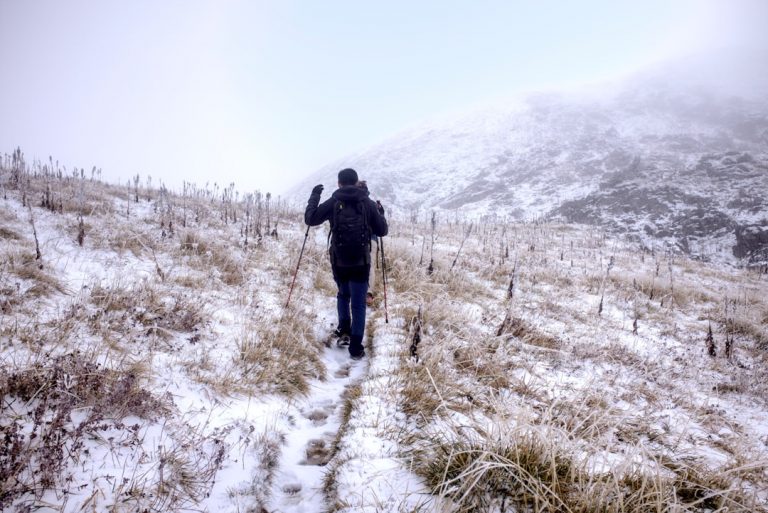
Rocky Mountain National Park’s August 21, 2026 trail report said summer was moving quickly toward fall, with warm days, cool evenings, possible rain and conditions that vary with elevation. On Longs Peak, the park also warned that cold overnight lows and new precipitation can create early-morning ice even when the route is otherwise snow-free.
A hand warmer is supplemental comfort, not a substitute for a dry clothing system, gloves, food, shelter or a turnaround decision. The National Weather Service advises staying dry and out of the wind, using moisture-wicking layers and wearing mittens or gloves. Build warmth around the clothing system in our merino vs. synthetic base-layer guide and the emergency items in the hiking safety checklist.
Four Battery-Free Amazon US Alternatives
As an Amazon Associate, Old Ranger Days earns from qualifying purchases.
These products are not claimed to be risk-free, and Old Ranger Days has not personally tested them. None uses a rechargeable lithium-ion battery, and none is part of the July 30 OCOOPA recall. Follow the package instructions, use a fabric barrier when directed and check skin frequently. People with diabetes, neuropathy, poor circulation or reduced heat sensation should seek medical advice before using any warming product.
HotHands Hand Warmers
Best use: day hikes, sporting events and emergency kits where simple air activation matters. Ideal buyer: someone who wants individually sealed, single-use pocket warmers without fuel or charging. The manufacturer specifies up to 10 hours of heat and says activation occurs after opening the package to air. Key limitation: they are disposable, take time to warm up and must be used exactly as directed to reduce burn risk. View HotHands Hand Warmers on Amazon.com.
Grabber 7+ Hour Hand Warmers
Best use: group outings, hunting camps and vehicle kits that need multiple pairs. Ideal buyer: someone who wants a compact air-activated warmer with a shorter stated duration than long-format options. Grabber specifies more than seven hours of continuous warmth and says no shaking or kneading is required. Key limitation: the packs are single-use and a bulk box is excessive for an occasional hiker. View Grabber 7+ Hour Hand Warmers on Amazon.com.
HotHands Super Warmers
Best use: long, mostly stationary cold-weather activities or an emergency kit where a larger warmer is acceptable. Ideal buyer: someone prioritizing duration over minimum pack size. HotHands describes this model as larger than its standard hand warmer and capable of providing up to 18 hours of air-activated heat. Key limitation: it is bulkier, disposable and can be excessive for an active hike where the body is already producing heat. View HotHands Super Warmers on Amazon.com.
Zippo 12-Hour Refillable Hand Warmer
Best use: repeated cold-weather outings where the user is comfortable measuring and carrying lighter fluid. Ideal buyer: an experienced camper, hunter or spectator who wants a refillable, battery-free device. Zippo specifies up to 12 hours of catalytic, flameless heat after ignition. Key limitation: it requires fuel, ignition, cooling before storage and the supplied protective pouch. Zippo warns against overfilling because it can cause malfunction, injury and fire. View the Zippo 12-Hour Refillable Hand Warmer on Amazon.com.
How to Choose an Alternative
For a short active hike: start with gloves or mittens and carry one sealed air-activated pair as backup. Opening a warmer at the trailhead can waste much of its useful duration before the coldest part of the day.
For a family or group: individually sealed air-activated packs are easier to distribute and do not require everyone to understand fuel handling. Keep the instructions with the box and supervise children.
For repeated stationary use: a refillable catalytic model reduces disposable-pack use but introduces lighter-fluid storage, filling and ignition steps. That tradeoff is a poor fit for air travel, children or users who do not want to manage liquid fuel.
For an emergency kit: check shelf life, packaging integrity and expiration guidance during regular kit inspections. A warmer complements—but never replaces—the shelter, insulation and communication items in our emergency preparedness guide.
Hand-Warmer Limitations on the Trail
External heat can mask a deteriorating situation. If a hiker is shivering hard, confused, fumbling, unusually tired or losing coordination, treat it as a possible cold emergency rather than a comfort problem. Add dry insulation and shelter, stop further heat loss, seek professional guidance and activate emergency help when necessary.
Warmers can also cause low-temperature burns after prolonged direct contact. Never sleep with a warmer against bare skin, tape a non-adhesive product to the body or place a fuel warmer loose inside bedding. Inspect skin regularly and stop use if there is pain, numbness, unusual redness or blistering.
Frequently Asked Questions
Are all OCOOPA hand warmers recalled?
No. The July 30, 2026 CPSC notice names seven models and relies on model and batch identification. Check the underside of the device and compare it with the official recall photographs and instructions.
Can I keep using a recalled warmer if it has never overheated?
No. CPSC instructs consumers to stop using the recalled products immediately. An uneventful ownership history does not remove the battery defect risk.
Can I throw the warmer away after receiving a refund?
Not in household garbage or ordinary recycling. Ask your local household hazardous-waste program whether it accepts defective lithium-ion devices and follow the recall administrator’s instructions.
Are disposable hand warmers reusable?
Standard air-activated HotHands and Grabber products are single-use. Resealing may slow a reaction temporarily, but it does not make them rechargeable or restore their original rated duration.
Is a Zippo refillable warmer flame-free?
Heat is produced catalytically after ignition and there is no open flame during normal warming, but lighter fluid and a flame are required during setup. Follow Zippo’s filling, ignition, pouch and cooling directions.
Should a hand warmer be part of every hiking kit?
It is optional supplemental gear. Dry insulating layers, weather protection, navigation, food, shelter, communication and a conservative turnaround plan have higher priority. See the broader Old Ranger Days outdoor gear guide for trip-based equipment decisions.
Official Sources
U.S. CPSC OCOOPA recall, July 30, 2026; OCOOPA recall portal; EPA used lithium-ion battery guidance; Rocky Mountain National Park trail conditions, August 21, 2026; National Weather Service cold-safety guidance; HotHands product documentation; Grabber product documentation; and Zippo hand-warmer instructions.
Temporary featured photo: Thomas Tygreat via Unsplash. An original, unbranded editorial image has also been prepared for publication.
Old Ranger Days is research-based: we work from verified specifications and official sources, and never claim hands-on testing unless it happened. Some links may be affiliate links. Editorial policy · Affiliate disclosure